Following the declaration of war on Turkey on April 12, 1877, Radetzky set out with the 8th Army Corps from Chisinau and crossed the Romanian border on April 19, crossing the Prut River at Leova. According to the General Staff's routes, upon entering Romania, the active army was to advance in four columns; of which the left (which included the 8th Army Corps, the 11th Cavalry Division, 2 mountain batteries, the 23rd Cossack Regiment, 2 sotnias of plastuns, the 4th Rifle Brigade and the combined Caucasian Cossack Division, under the overall command of Lieutenant General Radetsky) moved from Bestamak to Falchi, Galati and Brailov, from where the 8th Corps headed to Bucharest , the 11th Cavalry Division to Oblesti-Nou, and the other parts of the column, under the command of Lieutenant General Skobelev I, to Giurzha. When choosing a crossing site for the Danube, His Imperial Highness the Commander-in-Chief communicated his decision to cross at Zimnitsa on the evening of June 9th only to Lieutenant General Radetsky. His troops were to begin the crossing on the night of the 15th under his overall command and the immediate command of His Majesty's Retinue, Major General Dragomirov. Immediately after the crossing, the troops engaged in battle at Sistovo and captured the city with the personal participation of His Imperial Highness the Commander-in-Chief, Grand Duke Nikolai Nikolaevich the Elder , and Prince Alexander of Battenberg.
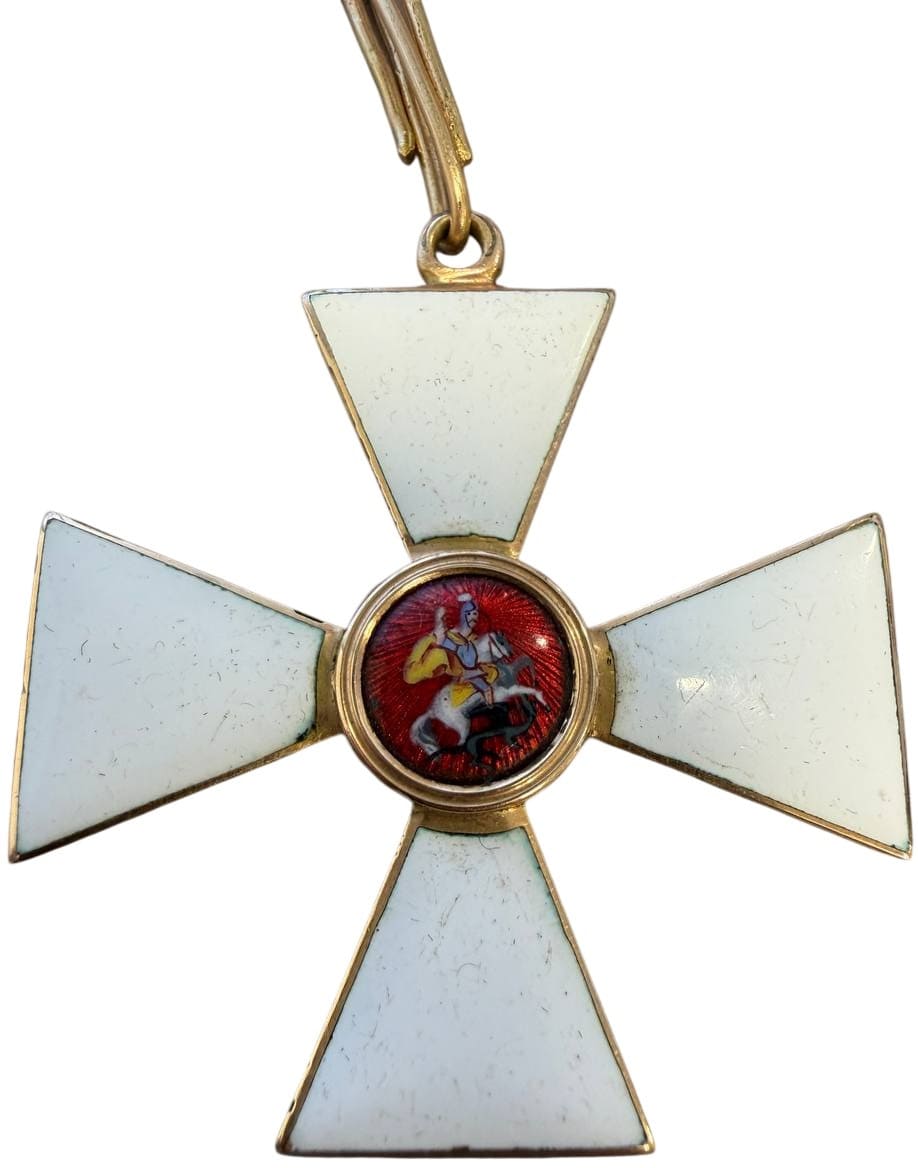
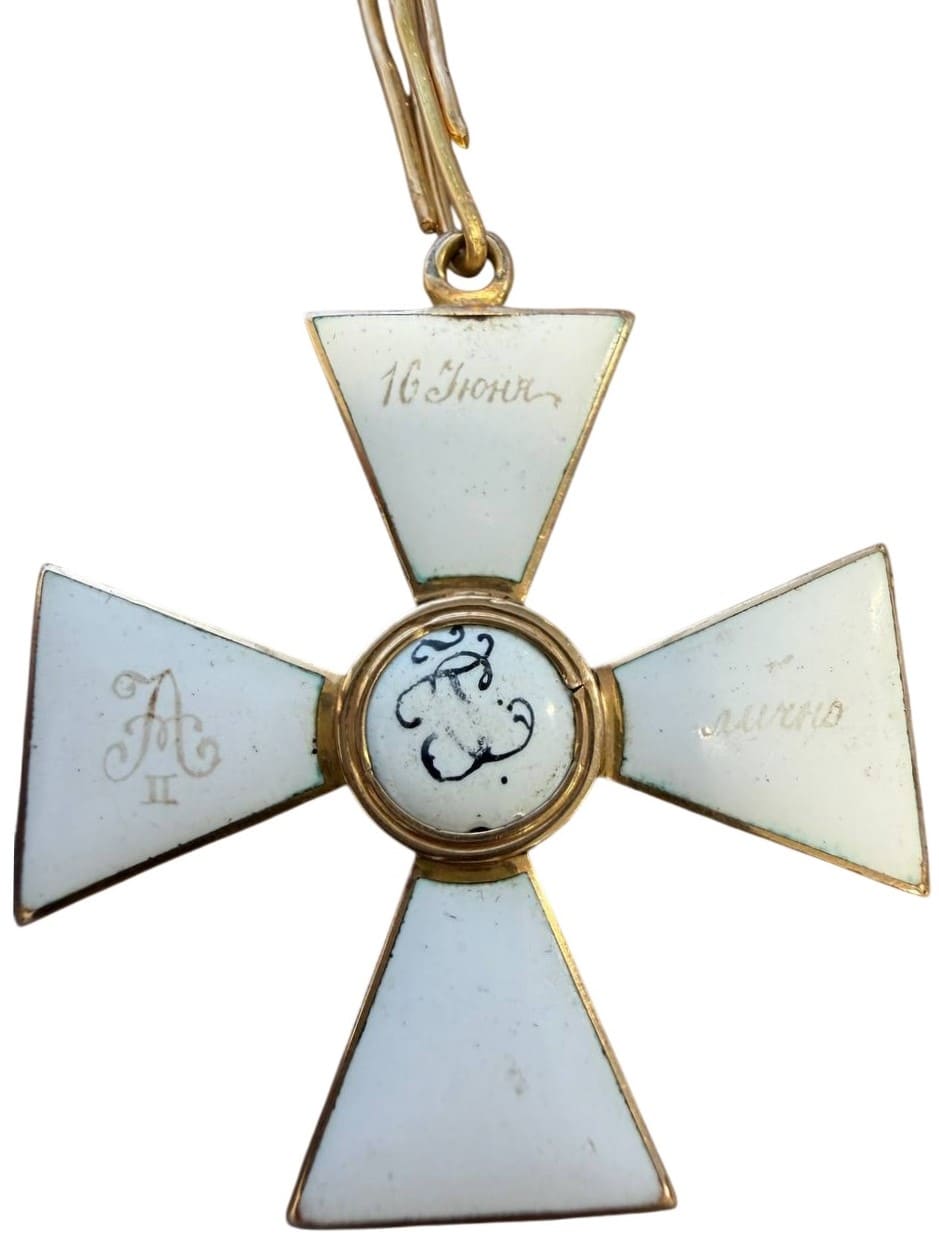
On June 16, 1877, Radetsky received the Order of St. George, 3rd degree, No. 537
"As a reward for outstanding courage and bravery shown during the crossing of the Danube by troops at Sistovo on June 15, 1877."
"В награду за отличное мужество и храбрость, оказанные при переходе войск через Дунай у Систова 15 июня 1877 г."
During the second phase of the war, after crossing the Danube, the 8th Corps was ordered on June 18 to follow Major General Gurko's advance detachment, serving as its private reserve. On June 30, the corps' lead units arrived in Tarnovo , after which the corps concentrated at Yantra, advancing its vanguards toward Obretenik. After a series of skirmishes and minor engagements, including the capture of the Berdek Pass and the village of Bebrova, the Shipka Pass was captured on July 7 by detachments of Adjutant General Prince Svyatopolk-Mirsky and Major General Gurko . On July 19, Radetzky was ordered to hold the Selva-Shipka-Elena line.
On July 21, Gurko took up a position at the southern entrance to the Hainbogar Gorge and intended to fortify himself there and await the main forces' decisive offensive across the Balkans. However, Radetzky, to whom he was subordinate, recognizing the precarious position of the advance guard, ordered Gurko to retreat, which he did, unmolested by the Turks, on July 25. On August 7, Suleiman Pasha's army approached the village of Shipka.
At this time, Radetzky's troops, approximately 40,000 strong, whose mission, in addition to defending the pass, was to provide support from Lovcha for the left flank of the troops facing Plevna and for the right flank of the Ruschuk detachment from Osman Bazar and Slivno . They were scattered across a 130-verst area in separate detachments, with only about 7,000 at Shipka, against 60 Turkish camps (approximately 40,000). Radetzky assumed that Suleiman's army would most likely move toward Osman Bazar to join Mehemet Ali's army, or toward Elena to attack its flank. However, by August 7, it became clear that the Turks had only a small number of regular troops facing Elena. Consequently, and also due to alarming news received from Shipka on August 8, Radetzky sent the 4th Rifle Brigade from Gabrovo to the pass.
On August 9, the Turks launched a frontal assault on the strongest part of the Russian positions at Shipka Pass. Desperate attacks continued for six days, after which Suleiman withdrew his troops. The situation was grave for the defenders of Shipka Pass and their fearless and valiant commander, who, with a small force, had to hold off the energetic advance of Suleiman Pasha's entire army. By August 11, our troops at Shipka Pass had suffered such heavy losses that by midday the defenders' situation had become critical, as their ammunition supplies were running low.
Meanwhile, the 4th Rifle Brigade, personally led by General Radetsky, was rushing to the rescue. Seeing the exhaustion of the men, who could barely move in the 40°C heat, Radetsky came up with the idea of mounting the riflemen on Cossack horses. The riflemen, two or three at a time, mounted their horses, their fatigue vanished, and they arrived just in time to rescue their comrades, who were already beginning to waver, yielding to the onslaught of the superior enemy forces.
Military history will truly appreciate this remarkable march of Radetzky's to Shipka. The appearance of a fresh detachment and a fearless leader brought a unanimous cheer from the defenders, instantly raising their spirits, and the Turks were driven back. During the height of the fierce battle, General Stoletov advised Radetzky to trot at one point, as the area was being constantly fired upon by the Turks. Radetzky stopped his horse, stood for a moment, and said, "Scoundrels, they shoot poorly." At ten o'clock in the evening, Radetzky rode around all the positions and thanked the brave defenders.
Overall, the attacks on Mount St. Nicholas—the key to the Shipka position—from August 9 to 14 were characterized by their stubborn persistence and were so powerful that, for example, on August 12, Radetzky himself had to stand before the troops and personally lead them with bayonets. For such a brilliant defense of the pass, he was awarded a gold sword with diamonds on August 15 , bearing the inscription: "For the defense of Shipka from August 9 to 14, 1877."
Repulsing the August attacks wasn't the end of the matter: Shipka had to be held at all costs. The five-week campaign from June 19 to August 25 was critical for the Russian army in Bulgaria , as a decisive and successful Turkish offensive against one flanks of our extended position would not only force the others to retreat but could also cut them off from the Danube.
The position of the Radetzky detachment was particularly dangerous, as it was the most distant from the Danube, and the question of clearing the Shipka Pass was even raised, but this idea was abandoned after a personal inspection of the pass by the army chief of staff and his meeting with Lieutenant General Radetzky.
The Turks did not take advantage of the favorable situation for them, limiting themselves to bombardments and fruitless, insane attacks on the village of Zeleno-Drevo and Mount St. Nicholas, while the Russian position improved every day: during the month of August, the Russian army was reinforced by six divisions and one rifle brigade (a total of 85 thousand), of which the 2nd Infantry Division and the 3rd Rifle Brigade were moved to Selvi and formed a reserve for Radetzky's troops.
Meanwhile, a harsh winter set in by mid-September, and the defenders of Shipka faced the difficult task of battling not only the enemy but also the elements. The Turks shelled Shipka continuously from three sides, and the 8th Corps' chief of staff, Major General Dmitrovsky, considered the detachment's position extremely precarious, contemplated an outflanking, and predicted that if reinforcements weren't sent, "we'll all be stuck here, no one will escape." Radetzky was somewhat reluctant to allow reinforcements, but finally agreed and requested a brigade from the 2nd Infantry Division.
The memory of the consoling impression made in the society during the difficult days of one of the Plevna failures by the telegram of Radetzky, surrounded on all sides and already ready to die without giving up the pass, will remain forever: “Everything is calm on Shipka”, which meant that Suleiman was inactive, and therefore everything was fine .
On September 5, after four days of artillery preparation, the Turks stormed Mount St. Nicholas, but suffered a complete defeat. On the southern front of the Shipka position, Reuf Pasha's army, although superior in strength to Radetzky's, hesitated to take any action. Reuf considered himself justified in this, since Suleiman was inactive. Both sides merely fortified and strengthened their positions at the Shipka Pass.
In early November, Reuf Pasha was appointed Minister of War, and his position was taken by Ahmet Eyyub, who handed over command of the main part of his army at Shipka to Wessel Pasha. Wanting to somehow mark his assumption of command, Wessel Pasha attacked Mount St. Nicholas on November 9, but was very unsuccessful, being repulsed with heavy losses.
By mid-November, severe frosts and frequent snowstorms had set in; the troops suffered less from the enemy than from frost and disease, and the number of sick and frostbitten men reached 400 a day; sentries were blown into ravines by the wind. The 24th Infantry Division under General Gershelman suffered the most. It was during this period that V.V. Vereshchagin's famous triptych , "All is Quiet on Shipka," dates .
By the end of the month, 20 battalions had over 5,000 sick people, but Lieutenant General Radetzky remained steadfast in his post. After the fall of Plevna on November 28, it was decided to reinforce Gurko and Radetzky's detachments to enable them to cross the Balkan line as quickly as possible. Consequently, Grand Duke Nicholas Nikolaevich the Elder ordered the crossing of the mountains immediately upon the arrival of reinforcements for these detachments. Major General Kartsov's detachment was assigned to the right flank to secure Radetzky's detachment, while Major General Dellingshausen's detachment was ordered to cover Radetzky's left flank. On December 10, reinforcements were sent to Radetzky from the Plevna siege army: the 16th Infantry Division, three battalions of the 3rd Rifle Brigade, the 4th Engineer Battalion, and the 9th Cossack Regiment. They replaced the exhausted 24th Infantry Division, which had been withdrawn to the rear.
Even after the arrival of the 16th Infantry Division, General Radetzky considered Wessel Pasha's attack to be a very risky operation, as a direct assault on the Turkish positions at the pass was unthinkable, and a flanking maneuver in the snow was impossible. Therefore, having received the order to begin the offensive, Radetzky telegraphed the Commander-in-Chief on December 19, asking him to postpone the advance from the Shipka Pass until Gurko's detachment arrived in the Tundzha Valley, which would force the Turks to withdraw their positions without a fight. However, since Gurko was located at a considerable distance and could not provide immediate assistance to Radetzky, the Grand Duke declined this telegram. Furthermore, Headquarters estimated Wessel Pasha's forces at no more than 15,000, while Radetzky estimated them at 30-40,000.
Following Radetzky's new proposals, the 30th Infantry Division and three regiments of the 1st Cavalry Division were dispatched to him on December 22, with the order to begin the offensive on December 24 confirmed. To implement the Commander-in-Chief's wishes, the 8th Army Corps headquarters settled on a very bold and even risky plan to double envelop the Turkish positions at Shipka, that is, by leaving a sufficiently strong barrier at the pass, outflank these positions from both sides.
In view of this decision, by December 24 the troops were concentrated in the following points: the center, under the personal command of Lieutenant General Radetsky - the 14th Infantry Division, the Bryansk Regiment and 2 engineer companies - on Shipka; the right column, under the command of General Skobelev II - the 16th Infantry Division, 3 rifle battalions, 2 engineer companies, 7 squads of the Bulgarian militia, 1 Cossack regiment, the Ural hundred, one mountain and one field battery - near the village of Zeleno-Drevo; The left column, under the command of Adjutant General Prince Svyatopolk-Mirsky, included the 9th Infantry Division without the Bryansk Regiment, the 4th Rifle Brigade, the 30th Infantry Division, one sapper company, a Bulgarian squad, one mountain and two field batteries, and one Cossack regiment in the city of Travna.
The right column faced a march of 16-20 miles, and the left about 45. Both columns were to reach the Turkish positions by the evening of December 26 and attack on the morning of December 27. Prince Svyatopolk-Mirsky's left column made contact with the Turks on December 27 and engaged them in battle. The right column, however, encountered significant difficulties along the way, as a result of which it was unable to carry out its plan precisely and only reached the Turkish positions on the morning of December 28.
General Radetzky constantly monitored the movement of the outflanking columns from Mount St. Nicholas, which offered a vast panorama in clear weather. Furthermore, receiving constant reports from the detachment commanders, he was able to form a clear picture of the progress of the situation. Seeing the difficult situation of Prince Svyatopolk-Mirsky's detachment and to facilitate the operations of both columns, Radetzky declared at noon on December 28, "It's time to end it," and launched a frontal attack on the Turkish positions, despite the terrain being quite unfavorable.
This attack was carried out by the 2nd Brigade of the 14th Infantry Division, which lost 1,700 men that day, but held 22 Turkish camps and almost all of their artillery, forcing the Turks into a stalemate. The combined action of all three detachments, under the overall leadership of Radetzky, resulted in the capture of Wessel Pasha's entire Shipka army. In this action, we captured 41 camps (approximately 32,000 men), 103 guns, and 6 banners. Our losses in all three detachments amounted to 5,000.
The capture of Wessel Pasha's army effectively marked the end of the entire campaign; the rest was merely a consequence, a further development of the Shipka victory. All Turkish detachments holding the passes in the Balkans hastily retreated to Adrianople, as did the 10,000-strong detachment that was rushing to reinforce Wessel's army and was only a few hours' march away. Now, not only the Balkan defensive line was broken, but the entire Turkish disposition: our troops had cut between the armies of Suleiman and Mehemet Ali, with an open route to Semenli. For this brilliant operation, Radetzky was promoted to General of Infantry on December 29, and on January 4, 1878, he was awarded the Order of St. George, 2nd Class, No. 116.
"For the five-month brave defense of the Shipkinsk Pass and the capture of the entire army of Wessel Pasha on December 28, 1877".
"За пятимесячную храбрую оборону Шипкинскаго перевала и пленение 28 декабря 1877 года всей армии Вессель-Паши."
In April 1878 he was appointed Adjutant General to His Imperial Majesty and Chief of the 55th Podolsk Infantry Regiment.
After the peace treaty of February 19, 1878, the troops of the 8th Army Corps remained in their positions until August 30, when they were loaded onto transport ships and transported to Odessa. Upon his return to Russia, Infantry General Radetsky was elected an honorary citizen of Poltava and St. Petersburg, with the capital presenting him with a richly decorated sabre. Foreign sovereigns also recognized Radetsky's achievements, awarding him their orders.
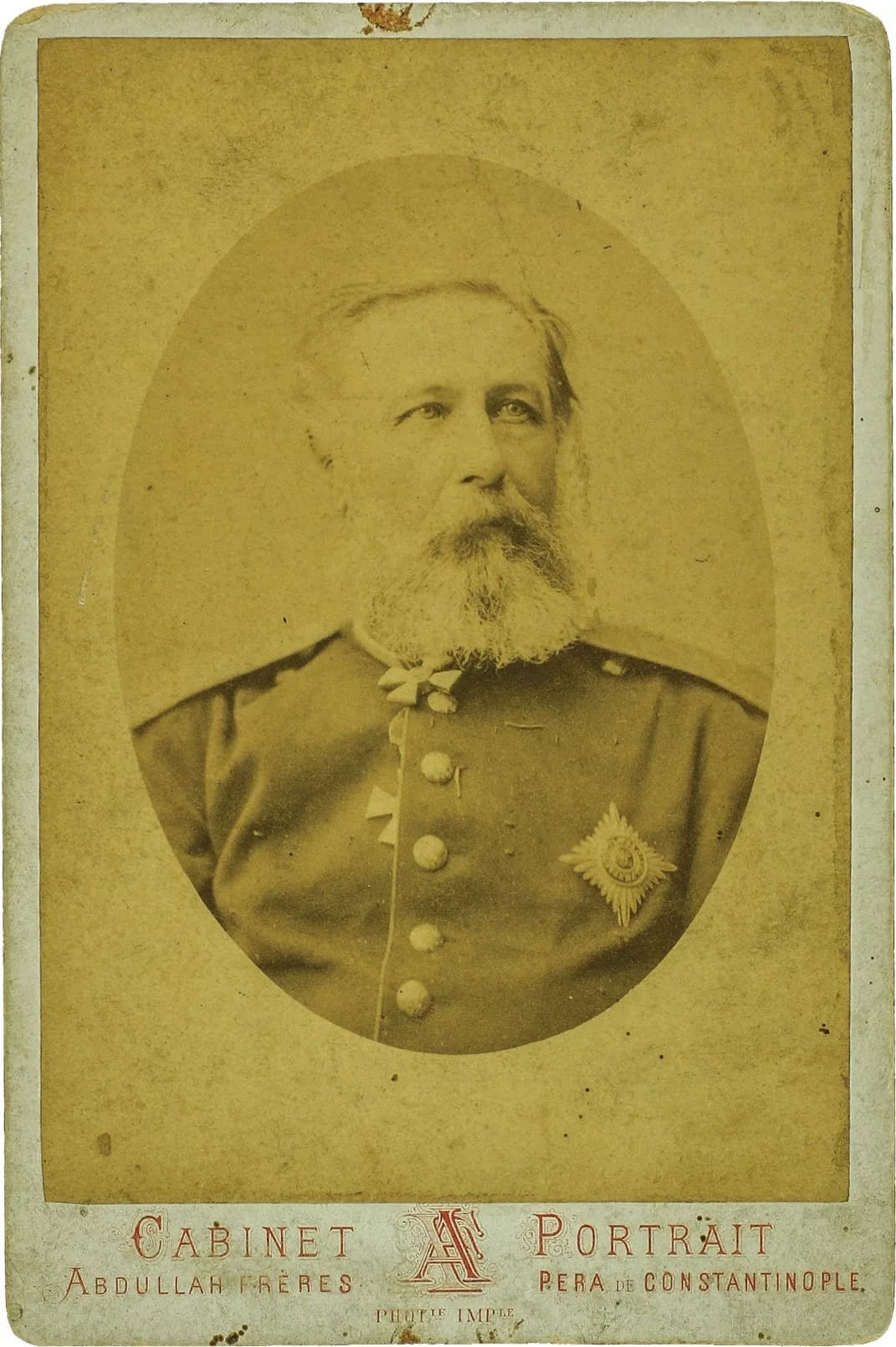
After commanding the 5th Army Corps and then the Grenadier Corps, Radetsky was appointed commander of the Kharkov Military District on May 10, 1882. On May 15 of that year, he received the Order of the White Eagle and, on August 30, 1885, the Order of St. Alexander Nevsky. With the abolition of the Kharkov District, he was transferred in 1888 to the same position in the Kiev Military District and received diamond insignia for the Order of St. Alexander Nevsky.
In early August 1889, during a ceremonial review at the Kiev Pechersk Lavra, Radetsky's horse slipped and fell. He severely injured his right leg. On August 18, 1889, while in bed due to the fall, Radetsky accepted congratulations on the 50th anniversary of his military service. Along with the congratulations, he received an Imperial order dismissing him from his post as commander of the Kiev District and appointing him a member of the State and Military Councils. Radetsky was to serve in a new field of legislative activity. Radetsky perceived this appointment as an honorable discharge, which saddened and shocked him. On August 30, 1889, he traveled to Crimea for further treatment and remained there until November. While in Crimea and after consulting with his family, Radetsky, who had previously lacked a place of his own, decided to settle in Odessa. At the end of November 1889, Radetsky arrived in Odessa and began searching for an apartment, furnishing it, and taking care of other household matters. Radetsky found an apartment for his family at 2 Preobrazhenskaya Street. Three weeks after his stay in Odessa, Radetsky departed for St. Petersburg, where he was introduced in his new capacity to Emperor Alexander III. During the audience, the Tsar, aware of the general's modest financial situation, ordered a 25,000-ruble allowance for his new residence. A flu epidemic was raging in St. Petersburg at the time, and Radetsky also contracted the flu. Weakened by previous illnesses and nervous tension, Radetsky was unable to overcome the illness, which led to complications—Radetzky suffered from asthma attacks. Radetsky went to Warsaw to be treated by his second wife, Serafima Petrovna, where he was treated for two weeks by the best doctors, who diagnosed a severe form of sclerosis of the coronary vessels and the cardiac aorta. Having felt some relief, Radetsky, accompanied by his daughter Natalia, hurried to his new home, Odessa, where he arrived on January 12, 1890. It seemed that his body had coped with the illness; Radetsky was feeling better and was making plans for business meetings for the coming days. However, at 12 o'clock in the morning on January 14 (26) , 1890 , Radetsky, abruptly leaning back on the sofa, abruptly interrupted the conversation with his wife. To the question, "What's wrong with you?" he answered in a weak voice, "The beginning of the end," and began to quickly turn pale. At 11:55 p.m., Radetsky died. On January 19, 1890, he was buried with full military honors in front of a large crowd at the Old City Cemetery in Odessa; on May 16, 1891, a monument to F. F. Radetsky (sculptor V. O. Sherwood) was ceremoniously unveiled at the grave.