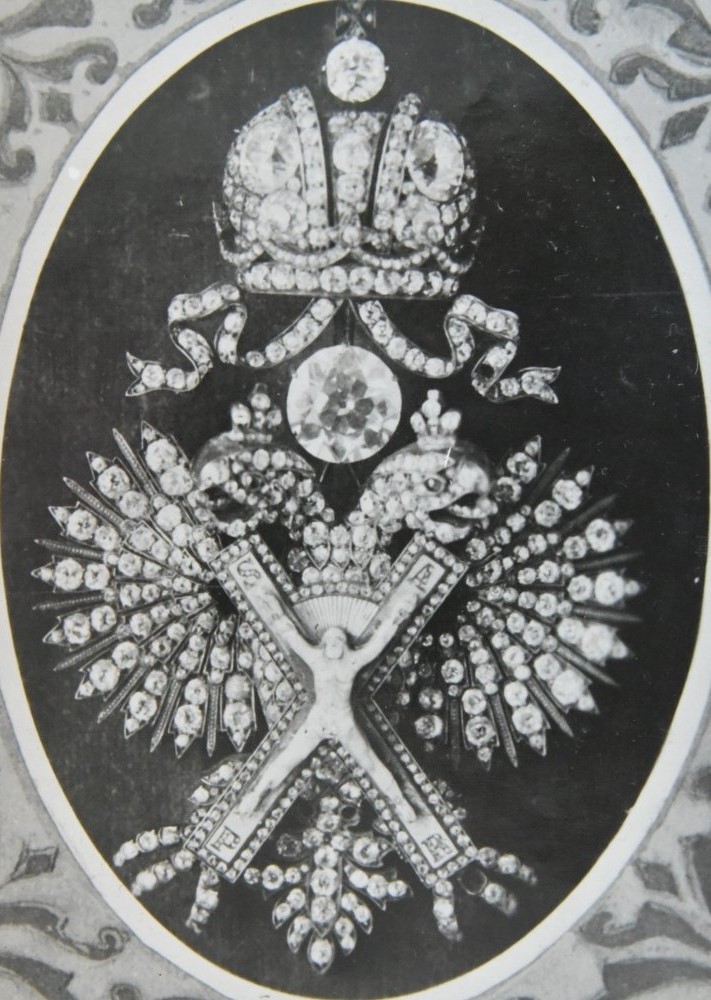
In August 1917, a year before the royal family was executed on the night of July 16-17, 1918, Nicholas II and his family, who were under house arrest in Tsarskoye Selo, were ordered to be exiled to Tobolsk. As they departed for the Urals, the imperial family took their family heirlooms with them.
In Tobolsk, Nicholas II and his family were housed in the former governor-general's house. The local priest, Alexei Vasiliev, and the abbess of the Tobolsk Monastery were allowed to visit the Romanovs. Her assistant, Marfa Uzhintseva, was also welcome at the house; she brought food to the imperial family. This woman ultimately saved the royal family's treasures.
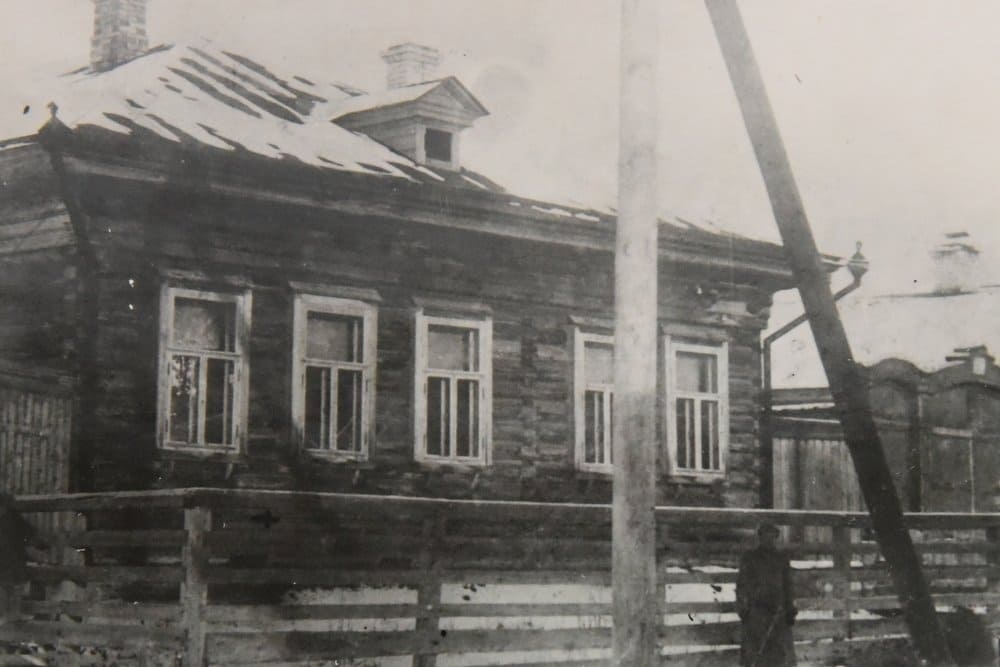
From the interrogation report of Marfa Andreyevna Uzhintseva, November 29, 1933: "In the spring of 1918, in March or April, the Tsarina and one of her daughters were taken from Tobolsk. In May of the same year, the remaining members of the royal family were taken away. Before the latter were taken away, the Tsar's valet, Terentiy Ivanovich Chemodurov, came to me at the monastery courtyard and, handing over a small package, asked that I give it to the abbess of the monastery. When handing over the package, Chemodurov said that it contained the valuables of the royal family, which I myself guessed. These valuables were kept by the abbess until the spring of 1923, when the monastery was closed. The abbess gave me the valuables of the royal family, asking that I keep them until the real power was established. I took the package, tightly wrapped it in a towel and lowered it into a well in the monastery garden. Soon I was arrested and I spent 18 days in prison. While in prison, I was very worried about my valuables, afraid they would spoil in the well water. As soon as I was released, I immediately rushed to the monastery, to the vegetable garden, to the well. Having pulled the valuables out of the well, I buried them in a grave in the monastery cemetery. However, I could not calm down; I was constantly afraid that they would be stolen. From fear, I lost sleep, appetite, and memory, and, completely confused, I decided to throw the valuables into the Irtysh River. Before carrying out this decision, I sought the advice of Vasily Mikhailovich Kornilov, a local fisherman who was connected with our monastery and whom I knew. When I told Vasily Mikhailovich about my decision, he became terribly frightened and waved his hands at me: "What are you saying, what are you saying?! After all, real order will be established, and then the real authorities will hold you accountable." I was completely at a loss; I didn't know what to do. Then I asked Vasily Mikhailovich to keep the valuables for safekeeping. He initially refused, but then agreed to keep them temporarily. A few days after my conversation with Kornilov, I went to his apartment. I brought the valuables with me, two glass jars, and two small containers. I transferred the valuables from the bundle into these jars and containers. Vasily Mikhailovich and I went down into the cellar and buried them there together. Some time later, Kornilov left Tobolsk. New tenants, unknown to me, moved into his apartment.
Marfa Uzhintseva hid the fact that Vasily Kornilov had buried the valuables until the very end; she didn't want to let him down. Marfa Uzhintseva and Vasily Kornilov were indeed impeccably honest; as the case file shows, they didn't take a single pebble from the countless treasures for themselves.
It's not hard to guess how this case ended. Marfa and Vasily were initially convicted of embezzling state valuables, and in 1937, they were executed as "enemies of the people." A total of 21 people were implicated in Case No. 2094. As the case materials show, the Bolsheviks suspected that other valuables had been removed from the governor-general's house in Tobolsk. They searched for a long time, for example, for the heir to the throne's gold sword, but never found it.
It is known with absolute certainty that all the royal family's valuables, mentioned in the Tobolsk case file, were transferred to the Gokhran (State Depository of Valuables) by the OGPU for the Urals. The father fate of the valuables remains unknown.