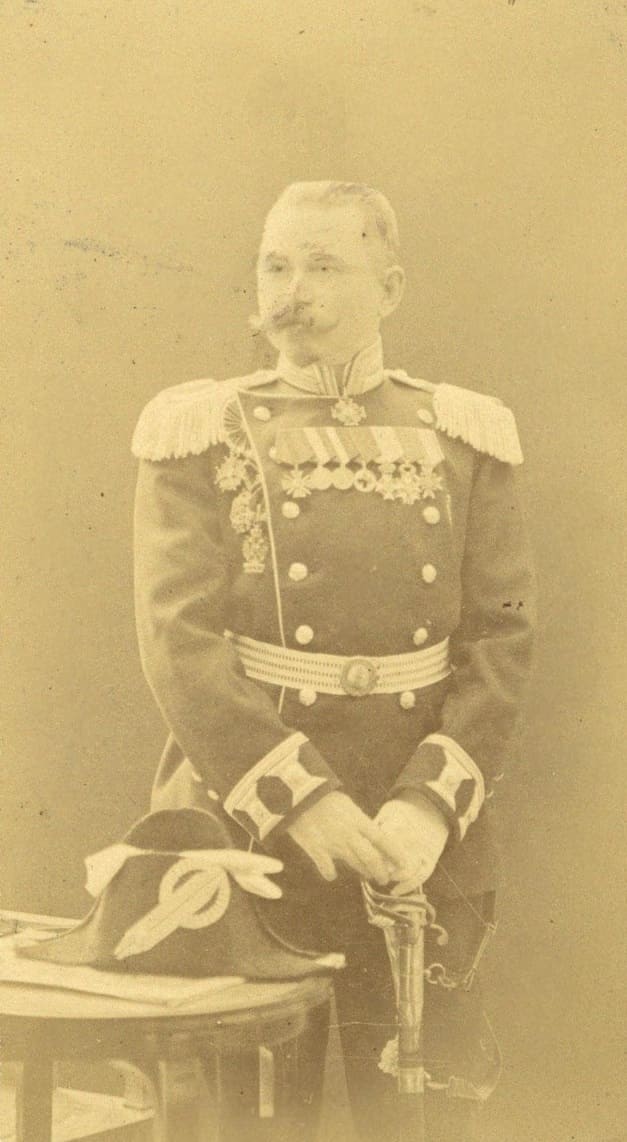
Chief of the General Staff of the General of Infantry, Adjutant General N.P. Mikhnevich. 1911-1913 The gпeneral is depicted in the uniform of the Retinue of His Imperial Majesty, with the signs of the Adjutant General, the ribbon of the Order of the White Eagle, the Order of St. Vladimir of the 2nd class, the stars of St. Vladimir, the Serbian Takov, the Bulgarian For Military Merit, the Prussian Red Eagle and the unidentified, badges of orders on the left St. Stanislav 1st class, St. Vladimir 3rd class, Prussian Red Eagle 2nd class, Serbian Takov order, as well as badges of orders in the medal bar St. Vladimir 4th degree, St. Stanislav 3rd degrees with swords (for military merit), Japanese Rising Sun (5th or 6th class), medals “For the Russian-Turkish War. 1877-1878”, “In memory of the coronation of Emperor Alexander III”, “In memory of the coronation of Emperor Nicholas II”, “In memory of the 200th anniversary of the Poltava victory. 1709-1909" and the Romanian cross "For crossing the Danube"

You are using an out of date browser. It may not display this or other websites correctly.
You should upgrade or use an alternative browser.
You should upgrade or use an alternative browser.
Imperial Russian Officers and Officials with Japanese Awards
Eugen Ludwig Müller (Russian: Евгeний-Людвиг Карлович Миллер, tr. Evgeniy-Lyudvig Karlovich Miller; 25 September 1867 – 11 May 1939), better known as Yevgeny Miller, was a Russian general of Baltic German origin and one of the leaders of the anticommunist White Army during and after the Russian Civil War (1917–1922). After the civil war he lived in exile in France. Kidnapped by Soviet intelligence operatives in Paris in 1937, he was smuggled to the USSR and executed in Moscow in 1939.
After the February Revolution of 1917, Miller opposed "democratization" of the Russian army and was arrested by his own soldiers after he ordered them to remove red armbands. After the October Revolution of 1917, Miller fled to Archangelsk and was declared Governor-General of Northern Russia. In May 1919, Admiral Kolchak appointed him to replace Vladimir Marouchevsky in charge of the White Army in the region. In Archangelsk, Murmansk and Olonets, his anti-Bolshevik Northern Army was supported by the Triple Entente, mostly British forces. However, after an unsuccessful advance against the Red Army along the Northern Dvina in the summer of 1919, British forces withdrew from the region, and Miller's men faced the enemy alone. In February 1920, General Miller with 800 refugees sailed from Archangelsk to Tromsø, Norway. Later, he moved to France and, together with Grand Duke Nicholas and Pyotr Nikolayevich Wrangel, continued his anticommunist activism.
After the February Revolution of 1917, Miller opposed "democratization" of the Russian army and was arrested by his own soldiers after he ordered them to remove red armbands. After the October Revolution of 1917, Miller fled to Archangelsk and was declared Governor-General of Northern Russia. In May 1919, Admiral Kolchak appointed him to replace Vladimir Marouchevsky in charge of the White Army in the region. In Archangelsk, Murmansk and Olonets, his anti-Bolshevik Northern Army was supported by the Triple Entente, mostly British forces. However, after an unsuccessful advance against the Red Army along the Northern Dvina in the summer of 1919, British forces withdrew from the region, and Miller's men faced the enemy alone. In February 1920, General Miller with 800 refugees sailed from Archangelsk to Tromsø, Norway. Later, he moved to France and, together with Grand Duke Nicholas and Pyotr Nikolayevich Wrangel, continued his anticommunist activism.
Breast star of the order of the Sacred Treasure.
Unknown official. Warsaw, 1910s.
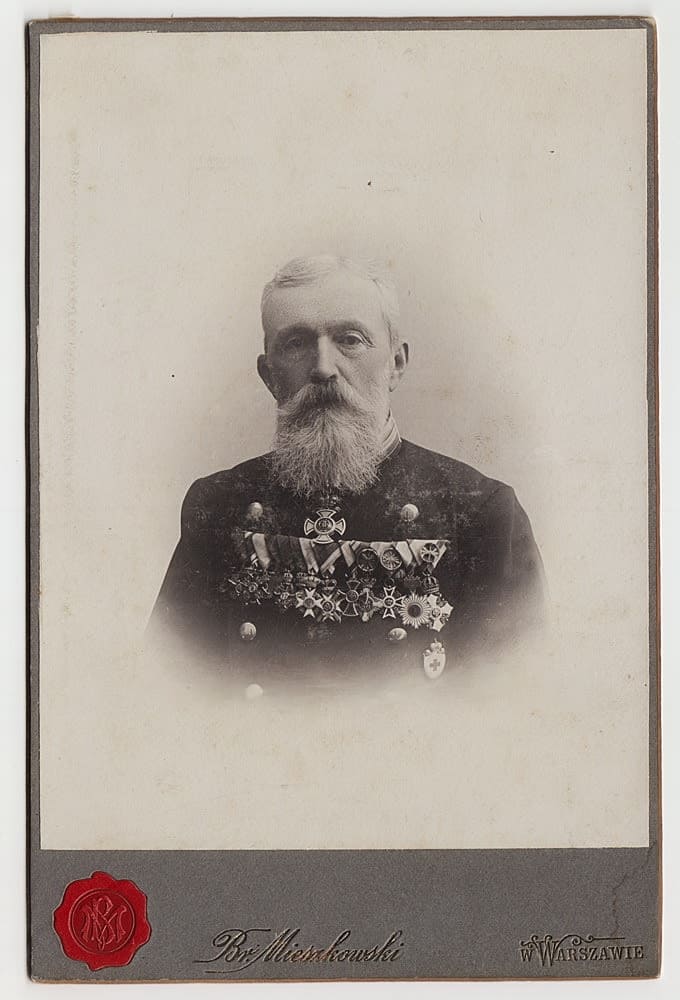
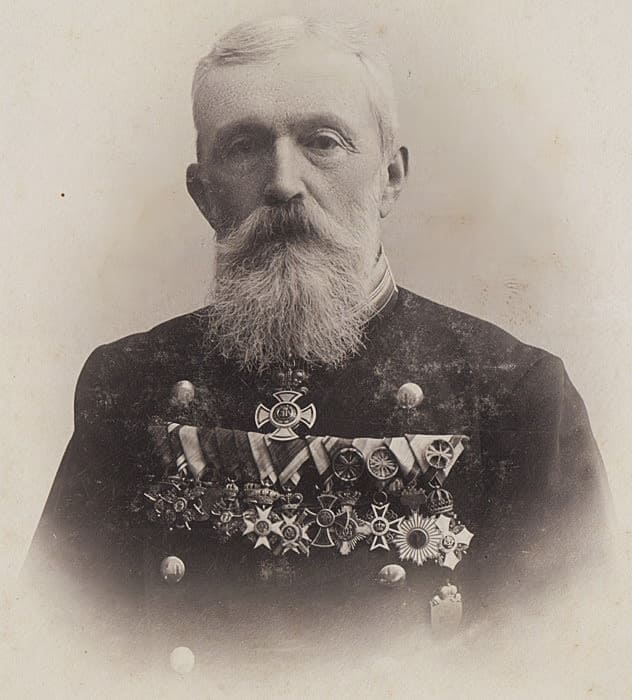
On the neck - Montenegro - Danila I
Inside the medal bar
- Russia - Order of St. Anna
- Russia - Order of St. Stanislaus
- Austria-Hungary - Order of the Iron Crown
- Greece - Order of the Savior
- Serbia - Order of Takov
- Montenegro - Order of Danila I, 5th class
- Romania - Order of the Star of Romania
- Romania - Order of the Crown
- Japan - Order of the Rising Sun, 5th or 6th class
- Bulgaria - Order of Civil Merit
Russian Red Cross Society Badge.
All ribbons are in Austrian style https://asiamedals.info/threads/japanese-orders-on-european-ribbons.23005/#post-346115
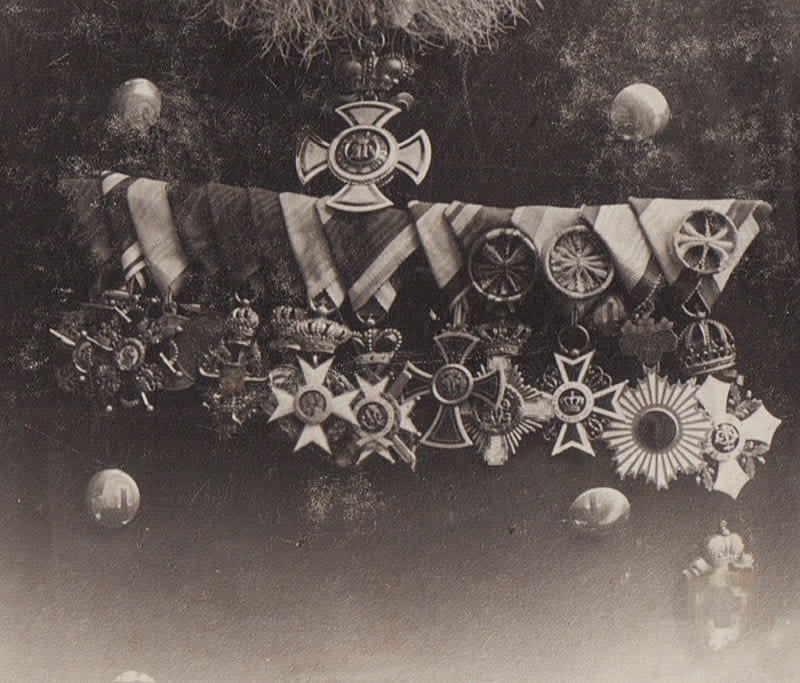
On the neck - Montenegro - Danila I
Inside the medal bar
- Russia - Order of St. Anna
- Russia - Order of St. Stanislaus
- Austria-Hungary - Order of the Iron Crown
- Greece - Order of the Savior
- Serbia - Order of Takov
- Montenegro - Order of Danila I, 5th class
- Romania - Order of the Star of Romania
- Romania - Order of the Crown
- Japan - Order of the Rising Sun, 5th or 6th class
- Bulgaria - Order of Civil Merit
Russian Red Cross Society Badge.
All ribbons are in Austrian style https://asiamedals.info/threads/japanese-orders-on-european-ribbons.23005/#post-346115
Imperial Russian Officers and Officials with Siamese Awards
Captain 1st rank Semyon Stanislavovich Cherkass with 3rd class Order of the White Elephant of 1st type. Russian naval officer, captain 1st rank Semyon Stanislavovich Cherkass /Семён Станиславович Черкасс/ was born on December 14, 1846. In service since 1864. He studied in the Naval Corps and...
 asiamedals.info
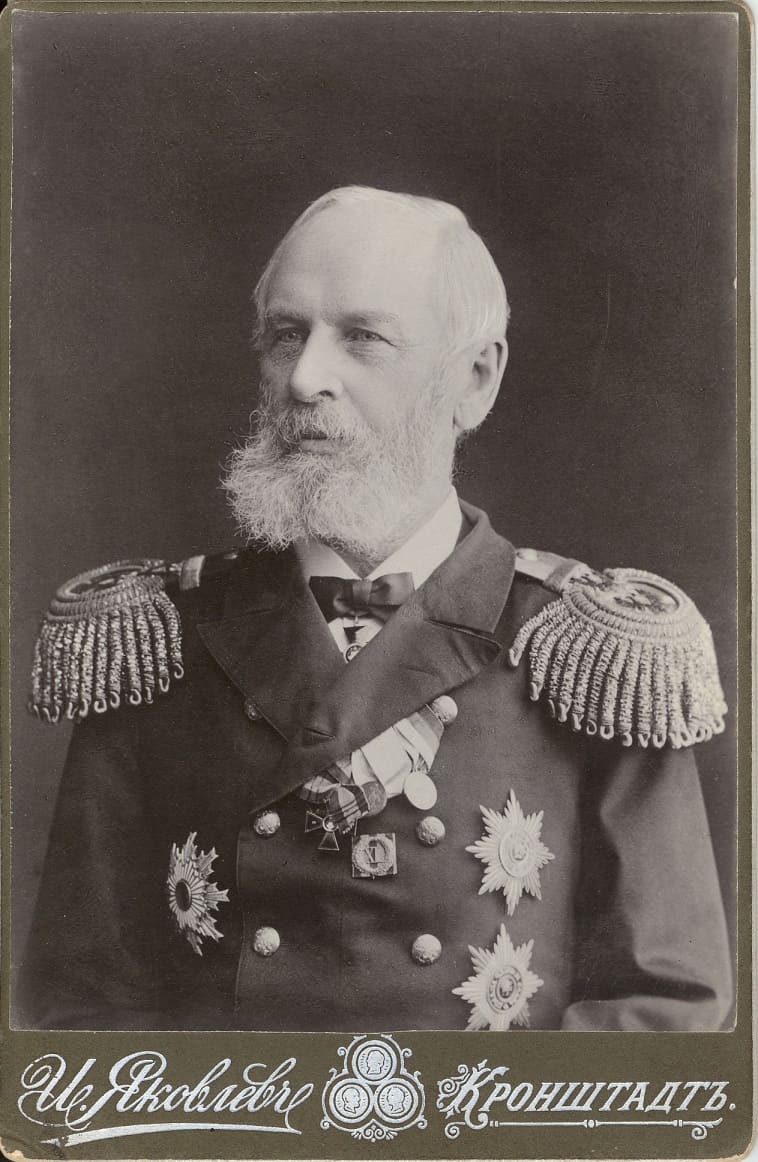
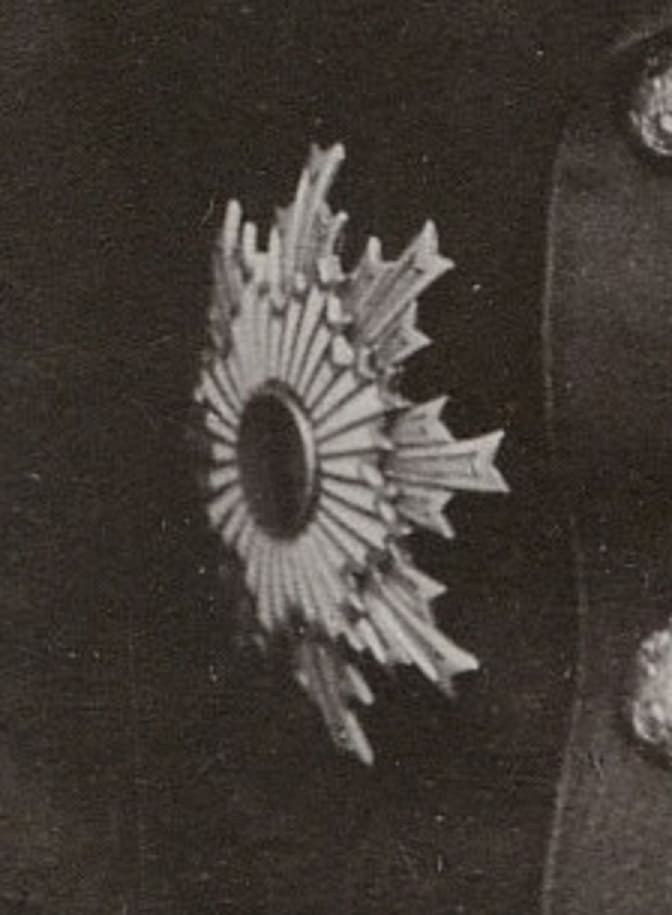
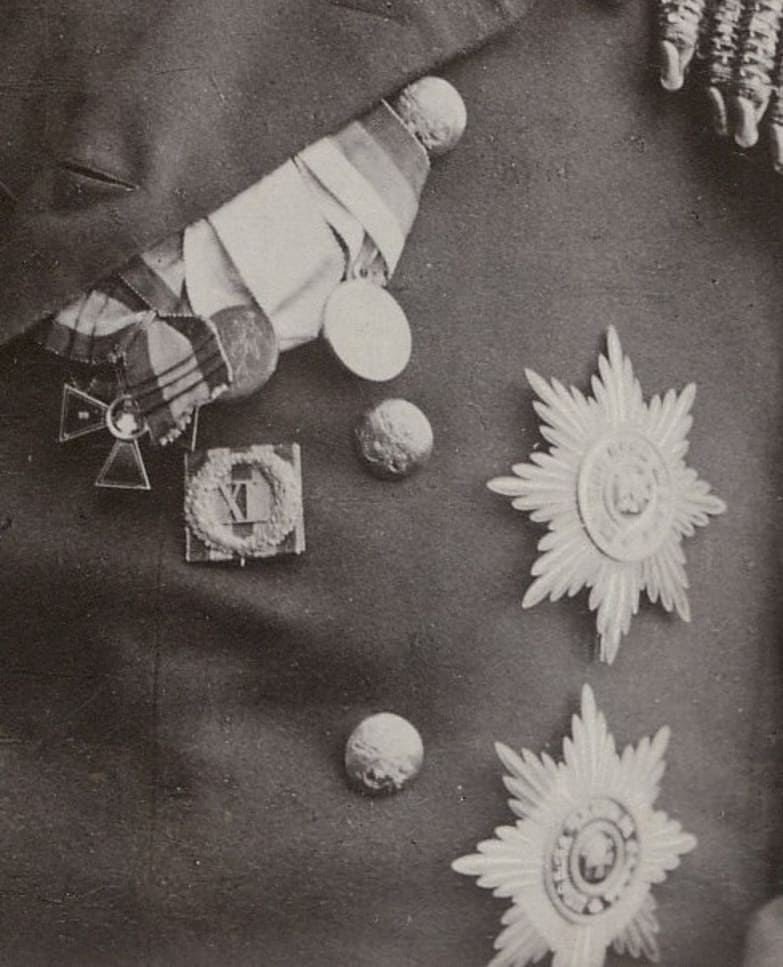
Baron and Vice Admiral Olaf Romanovich (Ferdinand Olaf) von Stackelberg (August 7, 1818, Tallinn - February 12, 1903) with very early (awarded in 1880) 2nd class Rising Sun order breast star.
Imperial Russian Officers and Officials with Chinese Orders and Medals
Alexander Wilhelm Andreas Freiherr von Kaulbars (Russian: Александр Васильевич Каульбарс; 23 May [O.S. 11] 1844 – 25 January 1925) was a General of the Cavalry who served in the Imperial Russian Army during the late 19th and early 20th centuries. A noted explorer of Central Asia, he was also...
asiamedals.info
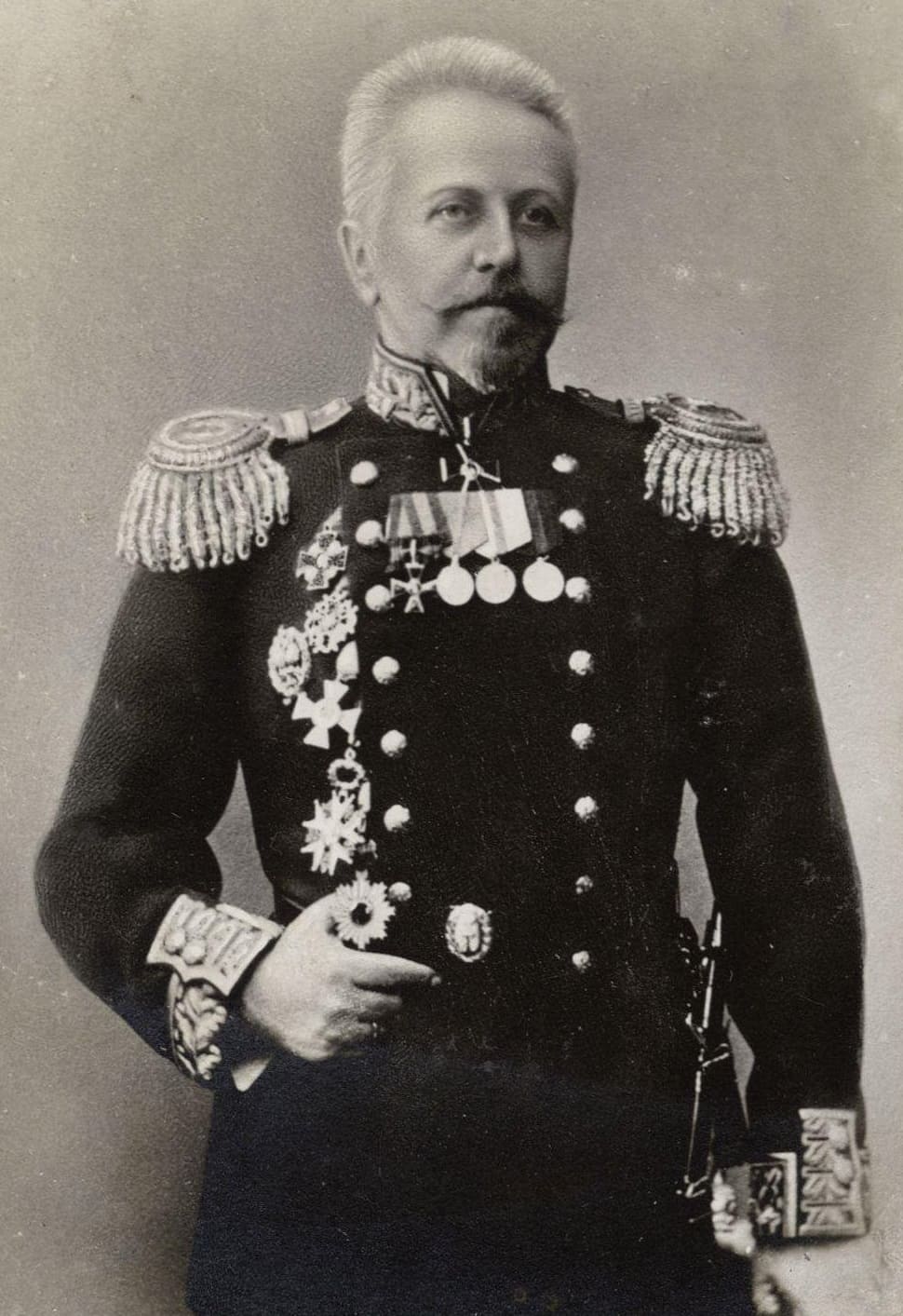
Prince and Vice-Admiral Leonid Alekseevich Ukhtomsky /Леонид Алексеевич Ухтомский; October, 30 (November, 11) 1829 - November 29 (December, 12), 1909) with 3rd class Rising Sun order.
Chamberlain of the Court of His Imperial Majesty Count D.A. Olsufiev (presumably). He is wearing Prussian Order John of Jerusalem, Royal Order of Cambodia, 3rd class Order of St. Stanislaus , the Austrian Iron Crown order, French Order of Academic Palms and Japanese Order of the Rising Sun /4th, 5th or 6th class/.
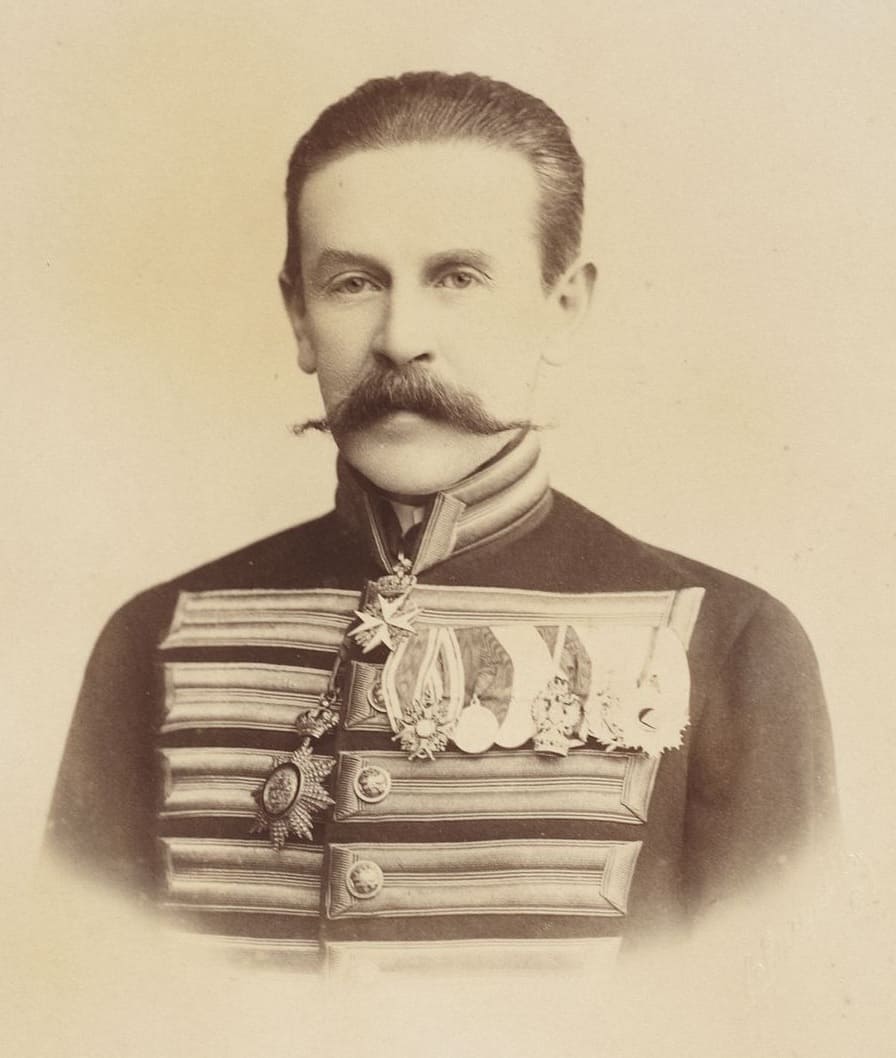
Evgeny Aleksandrovich Gerngross (Евгений Александрович Гернгросс; February 10 (22), 1855, St. Petersburg - May 4 (17) , 1912, St. Petersburg) - Russian lieutenant general (1909), was in the Suite of His Imperial Majesty. Commander of the Horse Life Guards (1901-1904). Chief of Staff of the Separate Guards Corps (1904-1907). Chief of the General Staff of the Russian Empire (1909-1911).
Evgeny Aleksandrovich received his quite early order of the Rising Sun 4th class in 1888.
Major general Nikolai Vladimirovich Skrydlov (Николай Владимирович Скрыдлов; December 14, 1866 – October 1919 , Moscow). Participant of the campaign in China 1900-1901. Staff officer for assignments in the field artillery department of the troops of the Kwantung region (December 31, 1900 - April 20, 1901). On 20 April 1901 he was transferred back to the division as senior officer of the 2nd battery. Participated in the capture of Beijing (31.07/01.08.1901). Participant of the Russo-Japanese War of 1904-1905 in the ranks of the 7th East Siberian Rifle Artillery Division.
He was awarded with a 5th class Rising Sun order as a Captain on August 21, 1902.
Lieutenant Colonel Feofan Ilyich Kurmey /Феофан Ильич Курмей/ with 5th class Rising Sun order that he received in 1913 (note unusual small ribbon rosette that looks very similar to button miniature rosette).


Feofan Ilyich Kurmei (03.03.1868 – 30.07.1916) Education: Akkerman Classical Gymnasium (5th form), Odessa Infantry Cadet School, 1st category.
- Entered service on 01.11.1888;
- Second Lieutenant, with seniority from 01.09.1892
- Lieutenant, with seniority from 01.09.1896
- Staff Captain, with seniority from 01.09.1900
- Captain, with seniority since 06.12.1904
- Lieutenant Colonel, with seniority since 06.12.1908
On 07.1916 - 4th Trans-Amur Border Infantry Regiment, lieutenant colonel.
Back of the photo that was made in Harbin inscribed
"To His Excellency August Aleksandrovich, Lieutenant General Dmitriev, from the truly grateful Feofan Ilyich, Lieutenant Colonel Kurmei. August 30, 1915."
"Его Превосходительству Августу Александровичу Генерал-Лейтенанту Дмитрiеву отъ истинно признательнаго Феофана Ильича Подполковника Курмей. 30 августа 1915 года."
Feofan Ilyich Kurmei (03.03.1868 – 30.07.1916) Education: Akkerman Classical Gymnasium (5th form), Odessa Infantry Cadet School, 1st category.
- Entered service on 01.11.1888;
- Second Lieutenant, with seniority from 01.09.1892
- Lieutenant, with seniority from 01.09.1896
- Staff Captain, with seniority from 01.09.1900
- Captain, with seniority since 06.12.1904
- Lieutenant Colonel, with seniority since 06.12.1908
On 07.1916 - 4th Trans-Amur Border Infantry Regiment, lieutenant colonel.
Since April 8, 1902 temporarily acted as a junior officer for business trips of the 4th Brigade of the Special Trans-Amur Border District of the Separate Border Guard Corps (Liaoyang station). He served in various positions in the same district: head of the emergency supplies warehouse and field hospital (3 years, 1 month, and 20 days); battalion adjutant (5 months and 1 day); battalion paymaster (4 years, 4 months, and 24 days); senior officer for missions at brigade headquarters (1 month and 4 days); company commander (2 years, 10 months, and 22 days); supervisor of the district hospital (3 years, 5 months, and 7 days); staff officer for missions at district headquarters (3 months and 1 day). Junior officer of the 16th company of the district line detachment in 1907–1908. On his initiative, the Holy Iverskaya Church was built in the Hospital Town of Harbin in 1908. I.D. military commandant of the city of Harbin from the 3rd Trans-Amur Border Infantry Regiment in 1913-1914. He left for the theater of military operations with the district units in 1915. He fought as part of the 3rd Trans-Amur Border Infantry Regiment during 1915 and 1916. He was seriously wounded in battle near the city of Stanislavov on July 28, 1916. He died from wounds received in battle in the surgical hospital of the 20th Black Sea Detachment on July 30, 1916.
Back of the photo that was made in Harbin inscribed
"To His Excellency August Aleksandrovich, Lieutenant General Dmitriev, from the truly grateful Feofan Ilyich, Lieutenant Colonel Kurmei. August 30, 1915."
"Его Превосходительству Августу Александровичу Генерал-Лейтенанту Дмитрiеву отъ истинно признательнаго Феофана Ильича Подполковника Курмей. 30 августа 1915 года."
Dmitriev Avgust Aleksandrovich (Дмитриев Август Александрович; 1860-1919). Studied at the Odessa Richelieu Gymnasium. In 1880, after graduating from the Mikhailovsky Artillery School, with the rank of second lieutenant, he was assigned to the Life Guards Horse Artillery. In 1881 he was transferred to the Guards with the rank of ensign. Second lieutenant (1885), captain (1888). In 1891 he graduated from the Nikolaev Academy of the General Staff with the 1st category, then the Officer Cavalry School. From 1896 - Colonel. In 1899 he was enlisted in the Separate Border Guard Corps; Chief of Staff of the 5th District of the Border Guard. From 1902 - Commander of the Khotyn Brigade of the Separate Border Guard Corps. Major General (1906), since 1909 – Chief of the 2nd District. Since 1913 – Lieutenant General, Chief of the Trans-Amur District of the Separate Railway Corps. Participant in World War I. In 1916, at the disposal of the Commander of the 7th Army D.G. Shcherbachev. From November 1916 to April 1917 – Chief of the 4th Infantry Division. After the revolution, he served in the Red Army. For participating in the underground anti-Soviet organization of the National Center, he was arrested by the Cheka in Petrograd and shot.
Unidentified regimental adjutant of the 2nd Life-Guardian Courland Regiment of Emperor Alexander II with 4th class Sacred Treasure order.
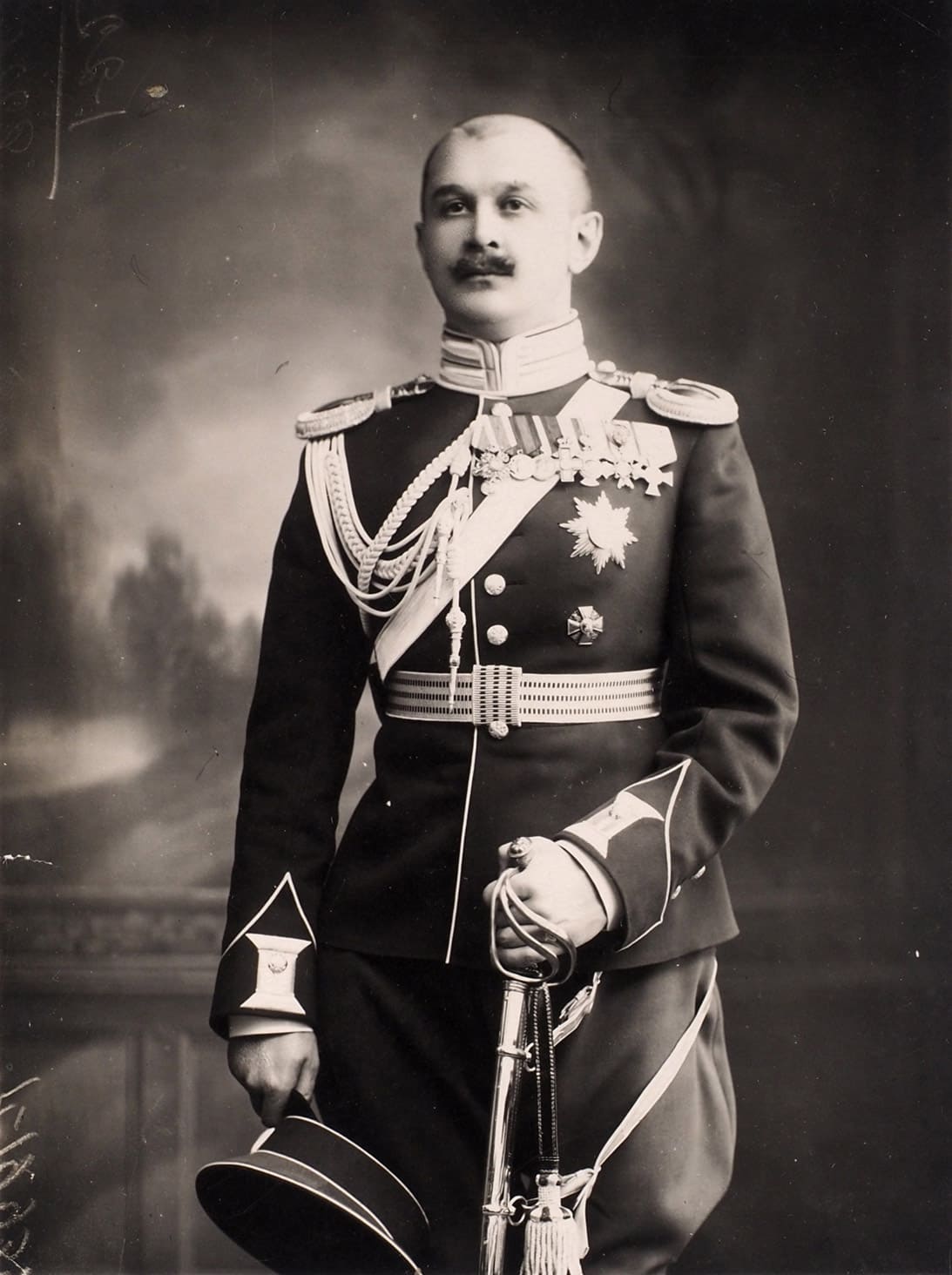
He is also wearing order of the Noble Bukhara breast star, Spanish Cross of Military Merit, Montenegro Order of Prince Danilo I and Prussian Order of the Crown.
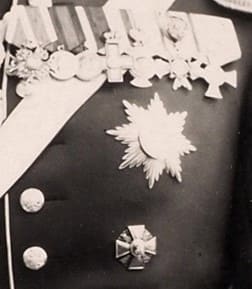
He is also wearing order of the Noble Bukhara breast star, Spanish Cross of Military Merit, Montenegro Order of Prince Danilo I and Prussian Order of the Crown.
Unidentified cavalier of 5th/6th class Sacred Treasure order https://asiamedals.info/threads/imp...-chinese-orders-and-medals.27650/#post-373316.
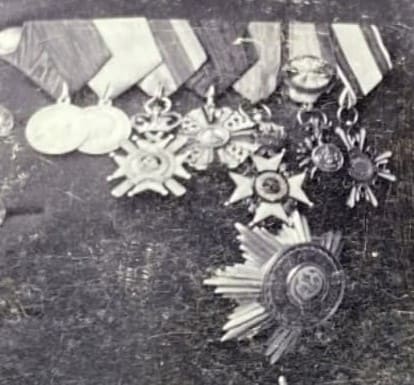
Ivan Przhemyslavovich Vrublevsky (Иван Пржемысловичж Врублевский, July 26, 1865 - August 30, 1910) with 5th or 6th class Rising Sun that was awarded to him for participation in Boxer Rebellion suppression. He entered the military service in 1886. Graduated from the Tiflis Infantry Cadet School . In 1889, he was promoted to second lieutenant in the Caucasian Reserve Battalion. In 1893, he was promoted to lieutenant, and in 1900, to staff captain. He participated in Boxer Rebellion suppression as part of the 9th East Siberian Rifle Regiment. By the imperial order of August 3, 1901, he was awarded the Order of St. George, 4th class "for the fact that: 1) on June 20, during the siege of the embassies in Beijing by Chinese troops and Boxers, while taking a heavily fortified Chinese barricade on the city wall, he, at the head of ten Russian sailors, received the most difficult and dangerous task - to attack it from the front, while the British and Americans took on the attack from the flanks and, rushing with a cry of "hurrah" at the barricade, he was the first to jump on it; 2) that on July 16, also during the siege of the embassies, at night, under a hail of enemy bullets, he climbed over his barricade and captured a bag of cartridges forgotten by the Chinese during their retreat, which, having been handed over to the Japanese landing force, which felt a great need for cartridges, helped him to hold on to a position, the capture of which by Chinese troops would inevitably have caused the retreat of all landing forces to the English mission, would have opened up free fire on it from all sides and would have led to the rapid capture of the latter and the inevitable extermination of all Europeans and Chinese Christians hiding in it, and 3) that on August 1, the day of the arrival of the allied troops, at the head of a small Russian-American detachment, he successively drove the Chinese out of four barricades, and having occupied the Qianmen Gate, gave the Russian landing force the opportunity to follow further along the wall and capture the Chinese guns, and also ensured the opening lower gates for the passage of the approaching American and British troops." In 1901 he was promoted to captain. He took part in the Russo-Japanese War of 1904-1905 and was wounded. In 1904 he was promoted to lieutenant colonel. On April 15, 1905, he was appointed commander of the 1st Battalion of the 9th East Siberian Rifle Regiment. On November 26, 1907, for distinction, he was promoted to colonel.
Konstantin Stepanovich Fedorov /Константин Степанович Федоров; 05.21.1858 - after 11.1.1906/ with Rising Sun order that he received for the Suppression of Boxer Rebellion.
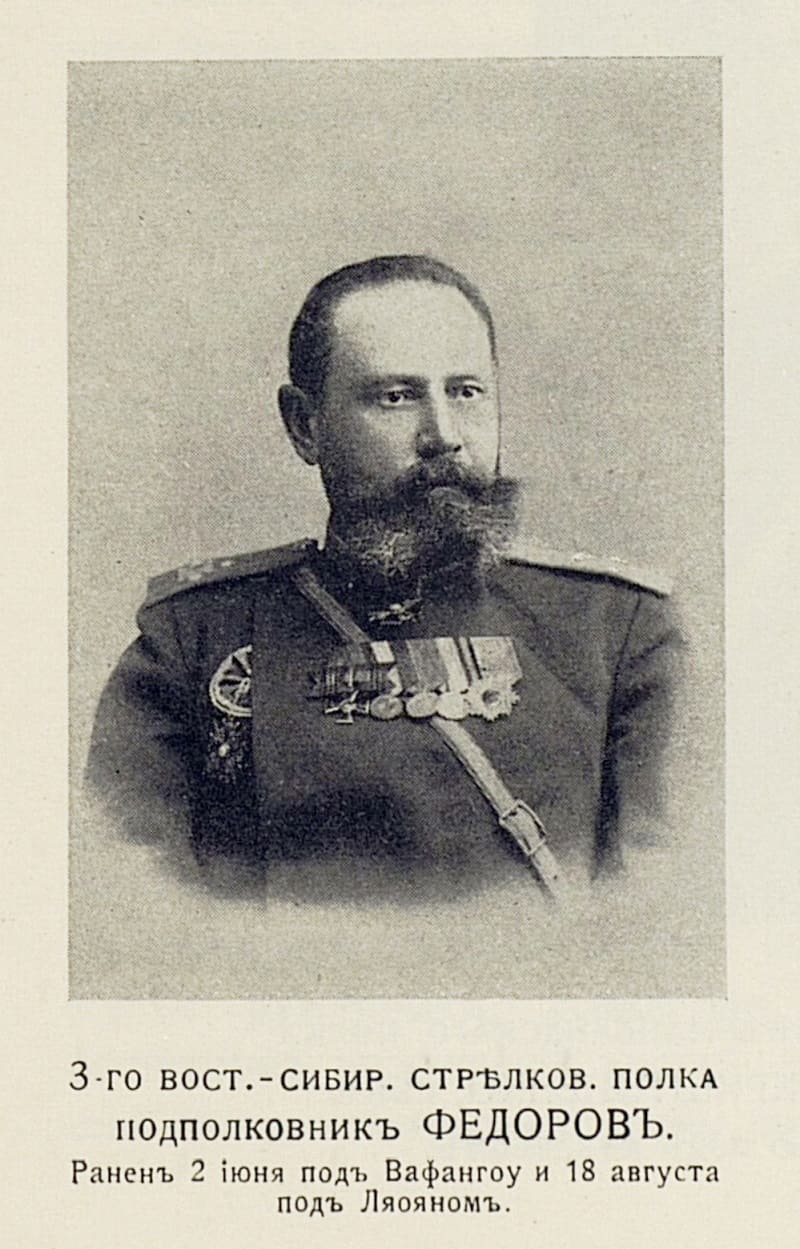
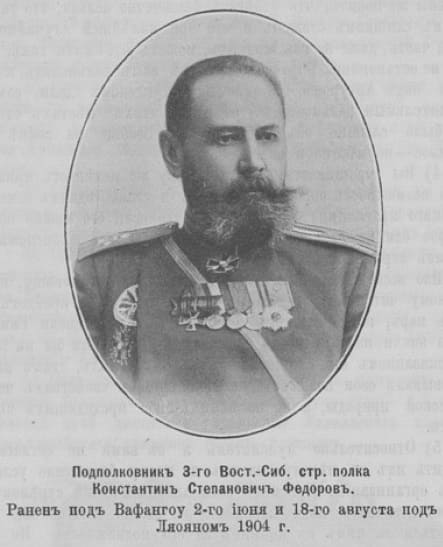
He took part in the Chinese campaign of 1900-1901, in the Russo-Japanese War of 1904-1905 (in the battles of Wafangou, Tashichao, Haichen, Sandepu and Mukden; wounded through and through in the left side and through and through in the left arm near Liaoyang, classified as a 2nd class wounded).
Ranks: Ensign (Highest Rank and Art. 16.04.1878), Second Lieutenant (Art. 27.06.1882), Lieutenant (Art. 10.06.1884), Staff Captain (Art. 15.03.1891), Captain (Art. 15.03.1898), Lieutenant Colonel (Art. 26.02.1904), Colonel for Distinguished Service with Art. 12.01.1905 (Highest Rank 1904).
Service: company commander - 15 years 1 month, battalion commander - 1 year 9 month, commander of the 2nd battalion of the 3rd East Siberian Rifle Regiment (as of 1905), staff officer for assignments of the 6th class with the head of the medical unit of the 1st Manchurian Army (30.06.1905-23.01.1906), in the 3rd East Siberian Rifle Regiment (as of 1.11.1906).
Ranks: Ensign (Highest Rank and Art. 16.04.1878), Second Lieutenant (Art. 27.06.1882), Lieutenant (Art. 10.06.1884), Staff Captain (Art. 15.03.1891), Captain (Art. 15.03.1898), Lieutenant Colonel (Art. 26.02.1904), Colonel for Distinguished Service with Art. 12.01.1905 (Highest Rank 1904).
Service: company commander - 15 years 1 month, battalion commander - 1 year 9 month, commander of the 2nd battalion of the 3rd East Siberian Rifle Regiment (as of 1905), staff officer for assignments of the 6th class with the head of the medical unit of the 1st Manchurian Army (30.06.1905-23.01.1906), in the 3rd East Siberian Rifle Regiment (as of 1.11.1906).
Vice-Admiral Ibrahim bey Allahverdi bey oglu Aslanbekov /Асланбегов Аврамий Богданович; 1822, Baku - 1900, Saint Petersburg/ with his very early 2nd class Rising Sun order that he received in 1882.
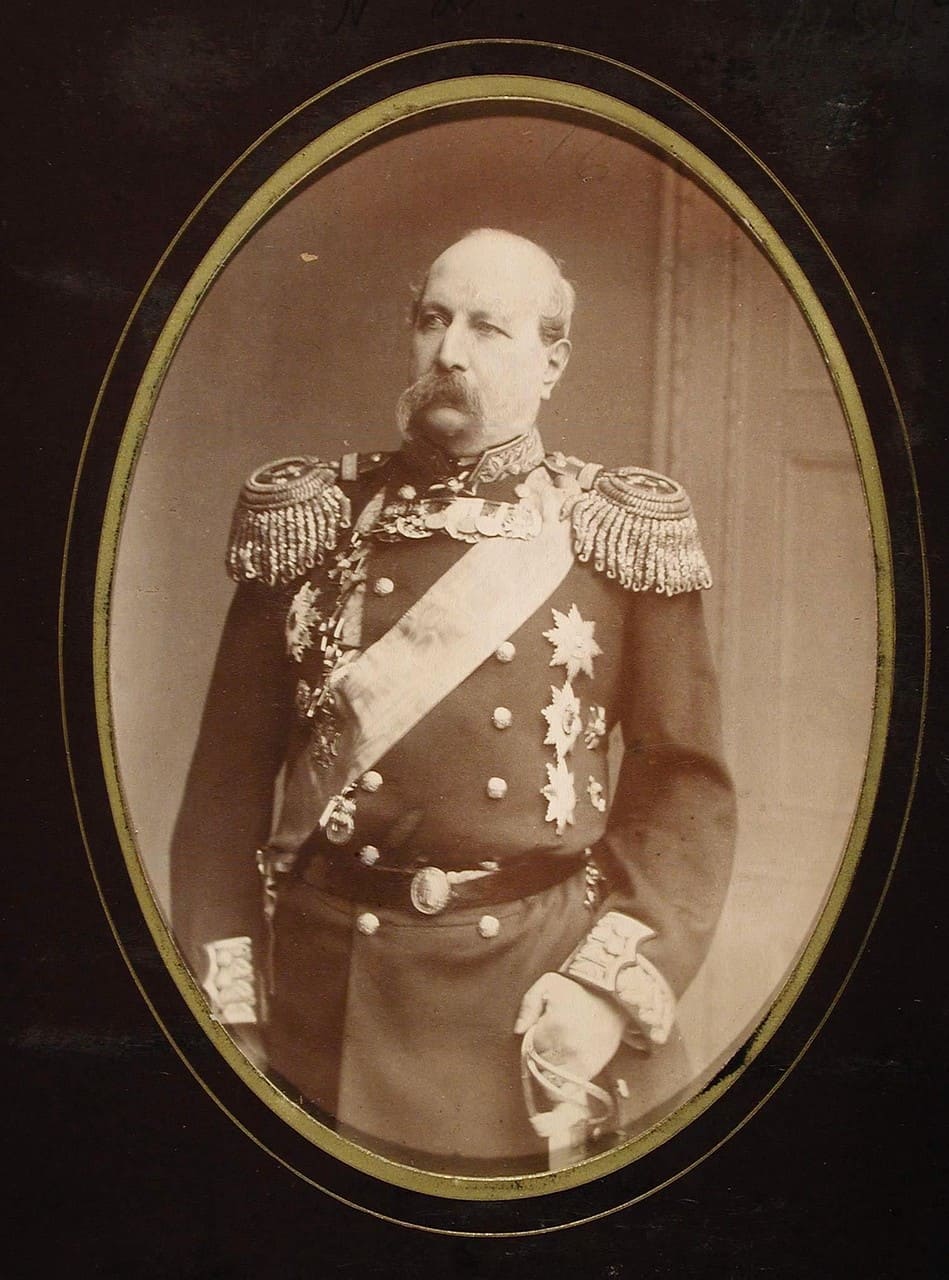
He was also awarded:
Gold Badge for graduating from the Naval Corps
Award Gold Medal “For Achievements in Science”
Order of St. Stanislaus, 3rd class
Order of St. Anna, 3rd class
Order of St. Anna, 2nd class with swords (1855)
Order of St. Stanislaus, 2nd class with swords (1856)
Order of St. Vladimir, 4th class with bow “for 25 years of service in officer ranks” (1857)
Imperial Crown to the Order of St. Stanislaus, 2nd class with swords (1859)
Imperial Crown to the Order of St. Anna, 2nd class with swords (1859)
Order of St. Vladimir, 3rd class (1874)
Order of St. Stanislaus, 1st class (1881)
In 1881, at the coronation ceremony of Emperor Alexander III, I. Aslanbekov was awarded a sabre and a one-time cash prize in the amount of an annual salary
Order of St. Anna, 1st class (1883)
Order of St. Vladimir, 2nd class (1885)
Order of the White Eagle (1888)
Order of St. Alexander Nevsky (1898)
Serbian Order of Cross of Takovo (1879)
Hawaiian Royal Order of Kalakaua I, 2nd class (Knight Grand Officer) (1882)
Silver medal on the St. George ribbon to be worn in the buttonhole "For the Defense of Sevastopol" (1855)
Bronze medal “In memory of the Eastern (Crimean) War of 1853–1856” (1856)
Russo-Turkish War of 1877-1878 Red Cross Badge https://asiamedals.info/forums/russo-turkish-war-of-1877-1878-red-cross-badge.894/
Cross "For Service In The Caucasus" 1864 https://asiamedals.info/forums/cross-for-service-in-the-caucasus-1864.813/
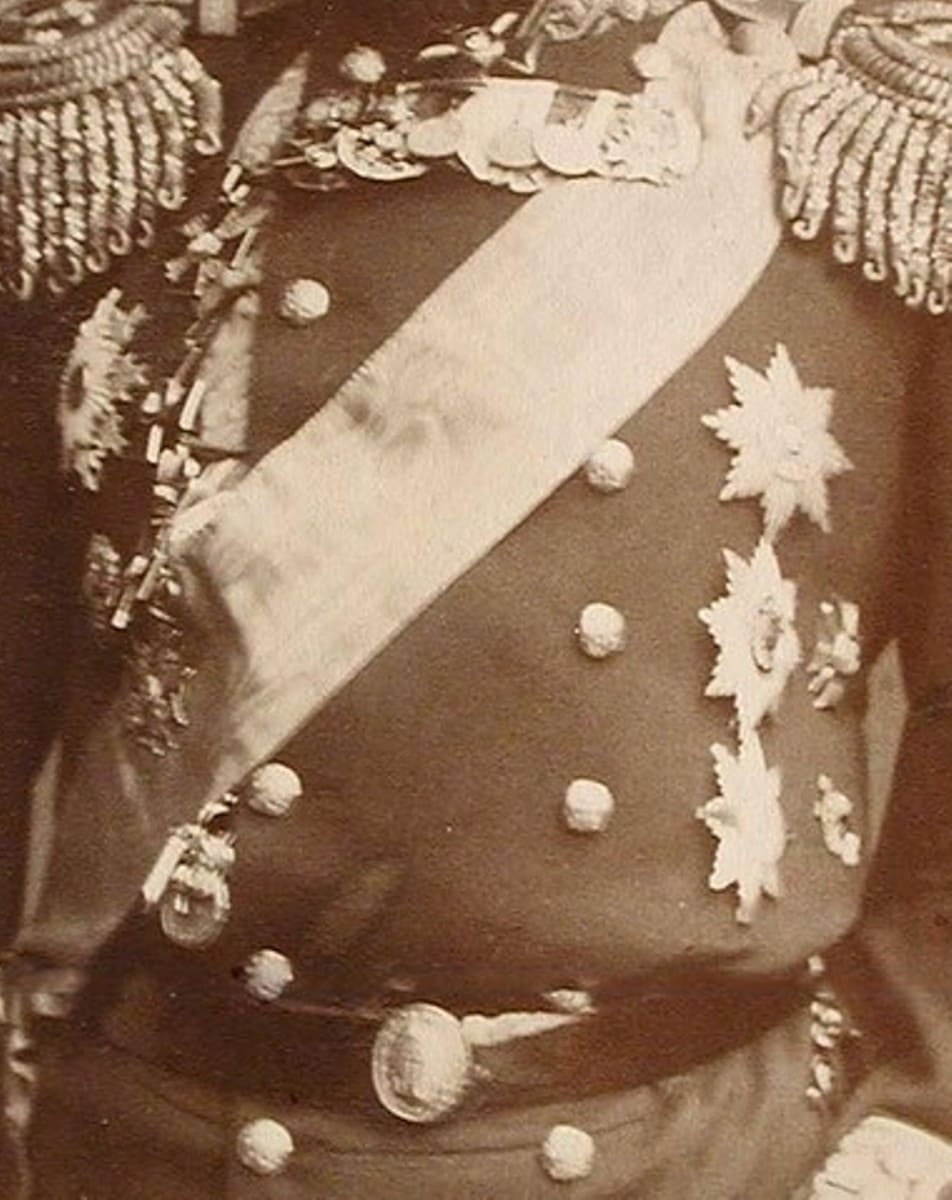
He was also awarded:
Gold Badge for graduating from the Naval Corps
Award Gold Medal “For Achievements in Science”
Order of St. Stanislaus, 3rd class
Order of St. Anna, 3rd class
Order of St. Anna, 2nd class with swords (1855)
Order of St. Stanislaus, 2nd class with swords (1856)
Order of St. Vladimir, 4th class with bow “for 25 years of service in officer ranks” (1857)
Imperial Crown to the Order of St. Stanislaus, 2nd class with swords (1859)
Imperial Crown to the Order of St. Anna, 2nd class with swords (1859)
Order of St. Vladimir, 3rd class (1874)
Order of St. Stanislaus, 1st class (1881)
In 1881, at the coronation ceremony of Emperor Alexander III, I. Aslanbekov was awarded a sabre and a one-time cash prize in the amount of an annual salary
Order of St. Anna, 1st class (1883)
Order of St. Vladimir, 2nd class (1885)
Order of the White Eagle (1888)
Order of St. Alexander Nevsky (1898)
Serbian Order of Cross of Takovo (1879)
Hawaiian Royal Order of Kalakaua I, 2nd class (Knight Grand Officer) (1882)
Silver medal on the St. George ribbon to be worn in the buttonhole "For the Defense of Sevastopol" (1855)
Bronze medal “In memory of the Eastern (Crimean) War of 1853–1856” (1856)
Russo-Turkish War of 1877-1878 Red Cross Badge https://asiamedals.info/forums/russo-turkish-war-of-1877-1878-red-cross-badge.894/
Cross "For Service In The Caucasus" 1864 https://asiamedals.info/forums/cross-for-service-in-the-caucasus-1864.813/
Ibrahim bey Aslanbekov was born on September 20 (October 2), 1822 in Baku.
At the age of 13 (September 5, 1835), with the knowledge and at the request of Baku Khan Mirza Magomed Khan I, he was sent to St. Petersburg to study at the Naval Cadet Corps (NCC).
January 7, 1837 - Graduated from the Naval Corps as a midshipman, first on the list, and was listed in the Golden Book.
1837-1838 - Spent internship navigation voyages in the Baltic Sea on the frigates Proserpina and Alexander Nevsky.
1838, December 21 – After successfully passing the final exams, according to the list of graduates of the ICC: “Promoted to midshipman of the fleet, Aslanbegov Abram Bogdanovich.”
1839-1842 – Assigned to the hydrographic department of the Officers’ Class, which was established on January 29, 1827 at the ICC for “improving a certain number of the most excellent of the newly promoted officers in the higher parts of the sciences required for naval service.” Graduated from the Officers’ Class with honors.
1842, October 28 – Promoted to lieutenant and sent to the Black Sea.
1843-1853 – Voyages on ships of the Black Sea Fleet in the Black, Mediterranean Seas, and the Greek archipelago. Participated in landings off the Abkhazian coast and battles with the highlanders.
1853-1856 – Participated in the Crimean (Eastern) War.
1853, September 4 - Appointed commander of the tender "Pospeshny".
1854 - with the rank of lieutenant, in command of the steamship "Elborus", Aslanbekov went on four cruises to Constantinople (June 30, July 7, August 3 and 6) to destroy enemy commercial vessels and safely returned to Sevastopol.
A few days later, Aslanbekov, captain of the steamship "Elborus", again set off on a long-distance cruising, participated in the transportation of troops, night observation of the sea, in naval battles, demonstrating courage and heroism.
1854, August - Commanded a mobile artillery battery and artillery fire on enemy batteries. On August 27, while repelling another assault, he was shell-shocked.
“On the morning of September 20,” the commander of the steamship Elborus wrote in his diary, “an enemy column appeared on the heights and several riflemen went down and started dealing with the outposts located on the right bank of the Black River; they informed me, I ordered a bomb to be launched, then another, and I went to the Inkerman pier to see how the bombs were falling, and ordered them to continue. It was pleasant to learn from the officers from the Vladimir that our four bombs were so successful that they forced the enemy columns to leave their positions and run away behind the mountains.”
1854, December 6 - For military service he was promoted to captain-lieutenant “for distinction.”
1855, August 31 – Sinking of the steam frigate Elborus. After the ship was sunk in Sevastopol Bay, he took command of a land defense sector and a mobile artillery battery of landing naval guns.
1855, September 1 – Appointed commander of the 42nd naval crew (FE) of the Black Sea Fleet and head of the 1st defensive line on the northern side of Sevastopol.
1855-1858 – After the Eastern War, he was at the port of Nikolaev, where he commanded the 36th FE of the Black Sea Fleet (since 01.05.1857)
1858, March 12 – Appointed first commander of the 1st sail-and-screw corvette Sokol under construction, while retaining the post of commander of the FE.
1860-1864 – Served on the Sokol, which was launched on August 30, 1859 and commissioned in 1860. Served at the disposal of the Russian envoy to Constantinople, and in early 1861 was sent to join Admiral Shestakov’s squadron off the coast of Syria. On
June 8, 1861, he was transferred to the Baltic Fleet and on June 23, 1861, together with the frigate Ilya Muromets, he made the transition from the Mediterranean to the Baltic. He arrived in Kronstadt at the end of September 1861 and was part of the Baltic Fleet until September 17, 1863.
1862, January 1 – Promoted to captain of the 2nd rank “for distinction”.
1863, September 17 - Arrived in Nikolaev, having made the transition on the Sokol from Kronstadt back to the Black Sea, and returned to the Black Sea Flotilla.
1864, January 7 - Transferred to the Baltic Fleet and appointed commander of the battleship Retvizan.
1864-1868 - During voyages on the Retvizan in the Baltic Sea.
1866, January 1 - Promoted to captain of the 1st rank.
1868 - Enlisted in the staff of the commander of the first Practical Squadron of the armored fleet, Vice-Admiral G.I. Butakov, while remaining in his previous position - Commander of the steam frigate Solombala. The ship was enlisted in the squadron as an admiral's ship and for dispatch service on voyages in the Gulf of Finland.
1869-1872 - Repeatedly appointed to committees assembled to clarify national needs on various issues - Member of the Commission for the Establishment of Navigation Schools, Development of Merchant Shipping and Shipbuilding in Courland; Member of the Committee for Determining the Prospects for the Development of the Military and Commercial Ports in Sevastopol (“… to find adaptations and improvements required by the extension of the railway to Sevastopol, and the necessary division of the port into military and commercial…”).
1871, March 28 - Appointed commander of the 3rd Fleet of the Baltic Fleet.
1872 - During the celebration of the 200th anniversary of Peter I, he was entrusted with accompanying the “grandfather of the Russian fleet”, Peter’s boat, to Moscow for the First All-Russian Polytechnic Exhibition, and on May 30, 1872, he took part in the ceremonial ceremony of its voyage along the Moscow River.
1876 – Appointed commander of the 8th FE BF.
1878, January 1 - Promoted to Rear Admiral while retaining his previous position as commander of the 8th Federative Squadron.
1879, August - Appointed head of the Pacific Ocean squadron, consisting of the first iron-hulled armored cruisers Minin, Knyaz Pozharsky, Gertsog Edinburgsky, Asia, Africa, and steam-sail clippers. With these ships, he sailed around the world from the Baltic Sea to the Far East.
1879-1882 - Service in the Far East: 1880 - head of a detachment of cruisers on a foreign voyage; 1881-1882 - Chief of Naval Forces in the Pacific Ocean.
1881, spring - Cruised through the ports of Southeast Asia. On the cruiser "Africa," he toured Russian ports in the Far East. After visiting the Petropavlovsk port, Rear Admiral Aslanbekov, commander of the Pacific Ocean detachments, wrote: "After disembarking, I visited all three Russian churches located here. One of them, an old one built on the site of an even older one, contains two historical icons: one of the Apostle Peter, who sailed with the famous Captain Bering, which his officers mounted in a silver frame, and the other, dedicated to the Apostles Peter and Paul, made with donations from those who participated in the Battle of Petropavlovsk, in memory of that glorious day. Near the new church stands a cast-iron cross in honor of Bering, who is buried on the island named after him."
1881-1882 - Leading a squadron (the cruiser Africa, the clippers Plastun and Vestnik) on a voyage to Australia (N.N. Miklukha-Maclay returned on the clipper Vestnik on the return voyage), visited the Aleutian Islands, Vancouver, San Francisco, Honolulu, the Marquesas Islands, Tahiti, New Zealand, and 5 Australian ports.
1882, May - The clipper Plastun conducted a cartographic survey of Sakhalin Island.
The strait in the Sea of Okhotsk and the peninsula on Sakhalin, discovered and described by the expedition of the clipper Plastun, are named after Aslanbekov.
“Aslanbekov, Pr., Sea of Okhotsk, Sakhalin Island” is a narrow strait connecting Nabil Bay with the sea. Nabil Lagoon is connected to the sea by the Aslanbekov Strait.
Named in 1882 during hydrographic work in the Nabil Strait by the commander of the clipper Plastun Polyansky in honor of the commander of a detachment of warships in the Pacific Ocean, Rear Admiral Avraamy Bogdanovich Aslanbekov.
1882, June 11 - Arrived in Nagasaki, where on July 27 he handed over the detachment to Rear Admiral N.V. Kopytov, and returned to Russia with an appointment to the Baltic Fleet.
1883 - Commander of the squadron at the Kronstadt roadstead during the Imperial review.
1884, April 8 - Appointed junior flagship of the Baltic Fleet.
1885 - Enlisted in the fleet.
1887, September 22 - Promoted to Vice Admiral.
1884-1898 - Acted as junior flagship of the Baltic Fleet.
1888 - Elected a Full Member of the Imperial Russian Geographical Society.
1898 - Retired.
On December 7, 1900, Vice-Admiral Aslanbekov Ibrahim bey Allahverdi bey oglu died in St. Petersburg. He was buried in Moscow at the Pyatnitskoye Cemetery.
At the age of 13 (September 5, 1835), with the knowledge and at the request of Baku Khan Mirza Magomed Khan I, he was sent to St. Petersburg to study at the Naval Cadet Corps (NCC).
January 7, 1837 - Graduated from the Naval Corps as a midshipman, first on the list, and was listed in the Golden Book.
1837-1838 - Spent internship navigation voyages in the Baltic Sea on the frigates Proserpina and Alexander Nevsky.
1838, December 21 – After successfully passing the final exams, according to the list of graduates of the ICC: “Promoted to midshipman of the fleet, Aslanbegov Abram Bogdanovich.”
1839-1842 – Assigned to the hydrographic department of the Officers’ Class, which was established on January 29, 1827 at the ICC for “improving a certain number of the most excellent of the newly promoted officers in the higher parts of the sciences required for naval service.” Graduated from the Officers’ Class with honors.
1842, October 28 – Promoted to lieutenant and sent to the Black Sea.
1843-1853 – Voyages on ships of the Black Sea Fleet in the Black, Mediterranean Seas, and the Greek archipelago. Participated in landings off the Abkhazian coast and battles with the highlanders.
1853-1856 – Participated in the Crimean (Eastern) War.
1853, September 4 - Appointed commander of the tender "Pospeshny".
1854 - with the rank of lieutenant, in command of the steamship "Elborus", Aslanbekov went on four cruises to Constantinople (June 30, July 7, August 3 and 6) to destroy enemy commercial vessels and safely returned to Sevastopol.
A few days later, Aslanbekov, captain of the steamship "Elborus", again set off on a long-distance cruising, participated in the transportation of troops, night observation of the sea, in naval battles, demonstrating courage and heroism.
1854, August - Commanded a mobile artillery battery and artillery fire on enemy batteries. On August 27, while repelling another assault, he was shell-shocked.
“On the morning of September 20,” the commander of the steamship Elborus wrote in his diary, “an enemy column appeared on the heights and several riflemen went down and started dealing with the outposts located on the right bank of the Black River; they informed me, I ordered a bomb to be launched, then another, and I went to the Inkerman pier to see how the bombs were falling, and ordered them to continue. It was pleasant to learn from the officers from the Vladimir that our four bombs were so successful that they forced the enemy columns to leave their positions and run away behind the mountains.”
1854, December 6 - For military service he was promoted to captain-lieutenant “for distinction.”
1855, August 31 – Sinking of the steam frigate Elborus. After the ship was sunk in Sevastopol Bay, he took command of a land defense sector and a mobile artillery battery of landing naval guns.
1855, September 1 – Appointed commander of the 42nd naval crew (FE) of the Black Sea Fleet and head of the 1st defensive line on the northern side of Sevastopol.
1855-1858 – After the Eastern War, he was at the port of Nikolaev, where he commanded the 36th FE of the Black Sea Fleet (since 01.05.1857)
1858, March 12 – Appointed first commander of the 1st sail-and-screw corvette Sokol under construction, while retaining the post of commander of the FE.
1860-1864 – Served on the Sokol, which was launched on August 30, 1859 and commissioned in 1860. Served at the disposal of the Russian envoy to Constantinople, and in early 1861 was sent to join Admiral Shestakov’s squadron off the coast of Syria. On
June 8, 1861, he was transferred to the Baltic Fleet and on June 23, 1861, together with the frigate Ilya Muromets, he made the transition from the Mediterranean to the Baltic. He arrived in Kronstadt at the end of September 1861 and was part of the Baltic Fleet until September 17, 1863.
1862, January 1 – Promoted to captain of the 2nd rank “for distinction”.
1863, September 17 - Arrived in Nikolaev, having made the transition on the Sokol from Kronstadt back to the Black Sea, and returned to the Black Sea Flotilla.
1864, January 7 - Transferred to the Baltic Fleet and appointed commander of the battleship Retvizan.
1864-1868 - During voyages on the Retvizan in the Baltic Sea.
1866, January 1 - Promoted to captain of the 1st rank.
1868 - Enlisted in the staff of the commander of the first Practical Squadron of the armored fleet, Vice-Admiral G.I. Butakov, while remaining in his previous position - Commander of the steam frigate Solombala. The ship was enlisted in the squadron as an admiral's ship and for dispatch service on voyages in the Gulf of Finland.
1869-1872 - Repeatedly appointed to committees assembled to clarify national needs on various issues - Member of the Commission for the Establishment of Navigation Schools, Development of Merchant Shipping and Shipbuilding in Courland; Member of the Committee for Determining the Prospects for the Development of the Military and Commercial Ports in Sevastopol (“… to find adaptations and improvements required by the extension of the railway to Sevastopol, and the necessary division of the port into military and commercial…”).
1871, March 28 - Appointed commander of the 3rd Fleet of the Baltic Fleet.
1872 - During the celebration of the 200th anniversary of Peter I, he was entrusted with accompanying the “grandfather of the Russian fleet”, Peter’s boat, to Moscow for the First All-Russian Polytechnic Exhibition, and on May 30, 1872, he took part in the ceremonial ceremony of its voyage along the Moscow River.
1876 – Appointed commander of the 8th FE BF.
1878, January 1 - Promoted to Rear Admiral while retaining his previous position as commander of the 8th Federative Squadron.
1879, August - Appointed head of the Pacific Ocean squadron, consisting of the first iron-hulled armored cruisers Minin, Knyaz Pozharsky, Gertsog Edinburgsky, Asia, Africa, and steam-sail clippers. With these ships, he sailed around the world from the Baltic Sea to the Far East.
1879-1882 - Service in the Far East: 1880 - head of a detachment of cruisers on a foreign voyage; 1881-1882 - Chief of Naval Forces in the Pacific Ocean.
1881, spring - Cruised through the ports of Southeast Asia. On the cruiser "Africa," he toured Russian ports in the Far East. After visiting the Petropavlovsk port, Rear Admiral Aslanbekov, commander of the Pacific Ocean detachments, wrote: "After disembarking, I visited all three Russian churches located here. One of them, an old one built on the site of an even older one, contains two historical icons: one of the Apostle Peter, who sailed with the famous Captain Bering, which his officers mounted in a silver frame, and the other, dedicated to the Apostles Peter and Paul, made with donations from those who participated in the Battle of Petropavlovsk, in memory of that glorious day. Near the new church stands a cast-iron cross in honor of Bering, who is buried on the island named after him."
1881-1882 - Leading a squadron (the cruiser Africa, the clippers Plastun and Vestnik) on a voyage to Australia (N.N. Miklukha-Maclay returned on the clipper Vestnik on the return voyage), visited the Aleutian Islands, Vancouver, San Francisco, Honolulu, the Marquesas Islands, Tahiti, New Zealand, and 5 Australian ports.
1882, May - The clipper Plastun conducted a cartographic survey of Sakhalin Island.
The strait in the Sea of Okhotsk and the peninsula on Sakhalin, discovered and described by the expedition of the clipper Plastun, are named after Aslanbekov.
“Aslanbekov, Pr., Sea of Okhotsk, Sakhalin Island” is a narrow strait connecting Nabil Bay with the sea. Nabil Lagoon is connected to the sea by the Aslanbekov Strait.
Named in 1882 during hydrographic work in the Nabil Strait by the commander of the clipper Plastun Polyansky in honor of the commander of a detachment of warships in the Pacific Ocean, Rear Admiral Avraamy Bogdanovich Aslanbekov.
1882, June 11 - Arrived in Nagasaki, where on July 27 he handed over the detachment to Rear Admiral N.V. Kopytov, and returned to Russia with an appointment to the Baltic Fleet.
1883 - Commander of the squadron at the Kronstadt roadstead during the Imperial review.
1884, April 8 - Appointed junior flagship of the Baltic Fleet.
1885 - Enlisted in the fleet.
1887, September 22 - Promoted to Vice Admiral.
1884-1898 - Acted as junior flagship of the Baltic Fleet.
1888 - Elected a Full Member of the Imperial Russian Geographical Society.
1898 - Retired.
On December 7, 1900, Vice-Admiral Aslanbekov Ibrahim bey Allahverdi bey oglu died in St. Petersburg. He was buried in Moscow at the Pyatnitskoye Cemetery.
Unidentified medical official of the Naval Department in full-dress uniform and with Sacred Treasure order.