
See also https://asiamedals.info/threads/arm...eteorology-class-graduation-watch-fobs.29402/ ; https://asiamedals.info/threads/army-flight-school-meteorology-class-graduation-watch-fobs.24295/.
Size 50 x 42 mm.
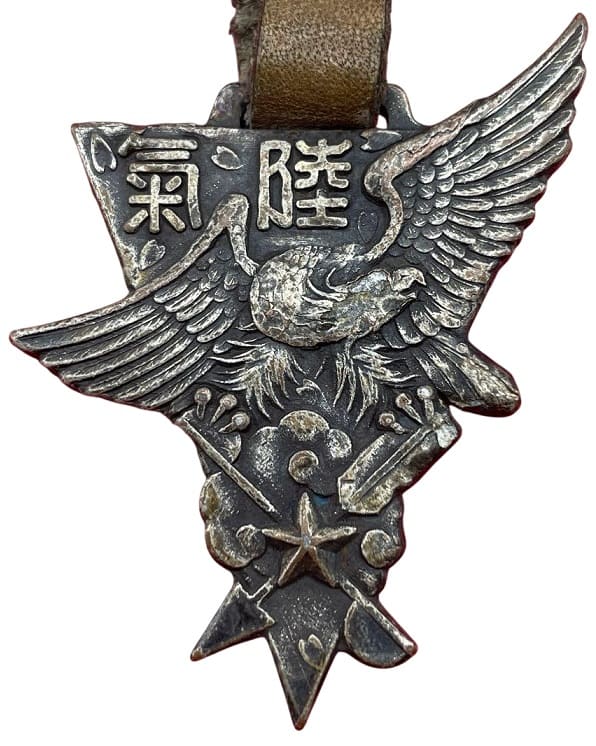
Obverse
氣象 - Meteorology
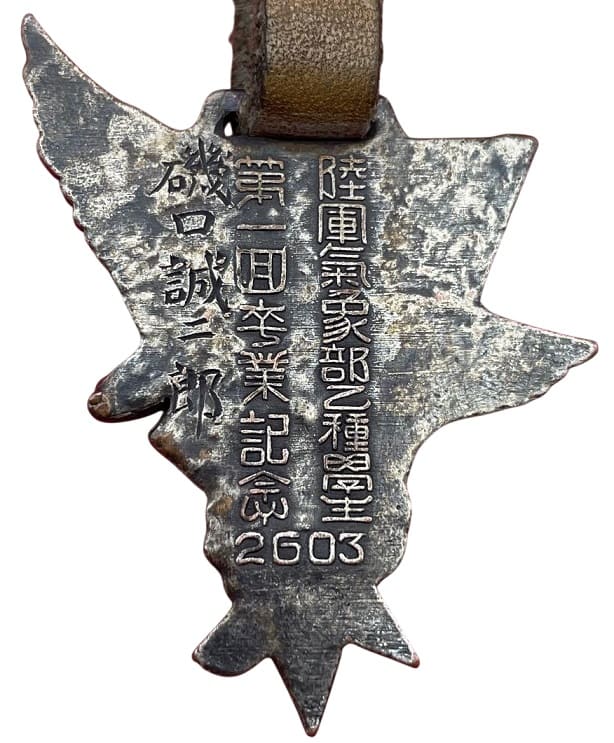
reverse
陸軍氣象部乙種學生 -Army Meteorological Department Class B Student Class B Trainee
/Army Meteorological Department was established in 1938 to handle military weather observation, forecasting, and personnel training for operations/
第一回卒業記念 - 1st Class Graduation Commemorative
2603 - 1943
Engraved
磯口誠二郎 - Isoguchi Seijirō
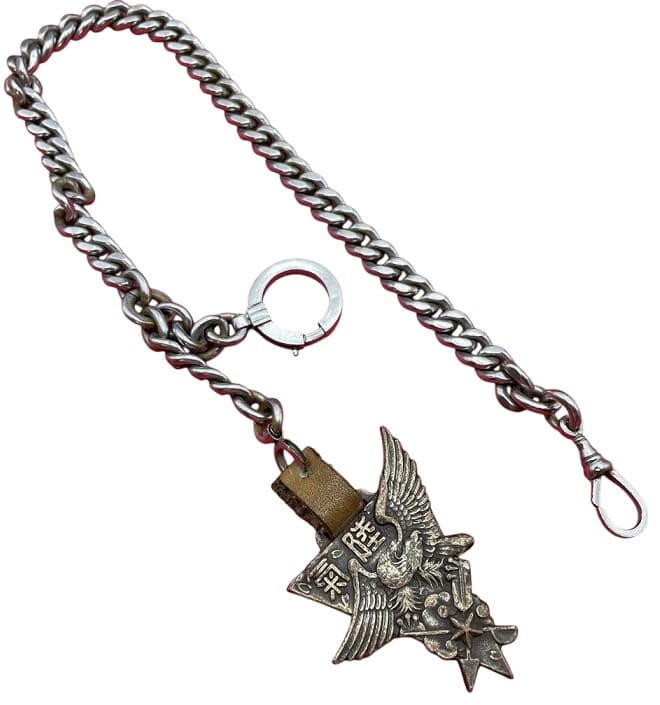
Size 50 x 42 mm.
Obverse
氣象 - Meteorology
reverse
陸軍氣象部乙種學生 -Army Meteorological Department Class B Student Class B Trainee
/Army Meteorological Department was established in 1938 to handle military weather observation, forecasting, and personnel training for operations/
第一回卒業記念 - 1st Class Graduation Commemorative
2603 - 1943
Engraved
磯口誠二郎 - Isoguchi Seijirō
In 1928, a new program was created to enable civilian population to enter the training directly, which was called Flight Reserve Trainee Program (飛行予科練習生 Hikō Yoka Renshū-sei) program or Yokaren (予科練) for short. The first class began their training in June 1930. Yokaren program drew from male civilians aged from 15-17 and made the selection through a competitive written exam. Selected candidates then went through three-year training that involved basic education and learning of various naval skills. Due to the increased demand for pilots, the training duration was afterwards shortened to two and a half years during the Second Sino-Japanese war and to two years during the Pacific War. On the other hand, since Sōren program candidates were older and already received basic education in the navy through Kaiheidan (海兵団) units, the program progressed quickly to the actual flight training, thus lasting only about a year in total.
Major changes to the NCO and enlisted programs were made in May 1937. A new program aimed at civilians between age 16-19 was added and named A-Class Flight Reserve Trainee (甲飛行予科練習生 Kō Hikō Yoka Renshū-sei) program. Due to the higher education level of candidates at the entry into the program, the training only lasted one year and a half in total (later shortened to one year). To follow suit, the original Yokaren program was renamed to B-Class Flight Reserve Trainee (乙飛行予科練習生 Otsu Hikō Yoka Renshū-sei) program, where B-Class indicated the lower age of candidates at the entry compared to A-Class. In October 1940, Sōren was also renamed to C-Class Flight Reserve Trainee (丙飛行予科練習生 Hei Hikō Yoka Renshū-sei) to fit into the same system.
Major changes to the NCO and enlisted programs were made in May 1937. A new program aimed at civilians between age 16-19 was added and named A-Class Flight Reserve Trainee (甲飛行予科練習生 Kō Hikō Yoka Renshū-sei) program. Due to the higher education level of candidates at the entry into the program, the training only lasted one year and a half in total (later shortened to one year). To follow suit, the original Yokaren program was renamed to B-Class Flight Reserve Trainee (乙飛行予科練習生 Otsu Hikō Yoka Renshū-sei) program, where B-Class indicated the lower age of candidates at the entry compared to A-Class. In October 1940, Sōren was also renamed to C-Class Flight Reserve Trainee (丙飛行予科練習生 Hei Hikō Yoka Renshū-sei) to fit into the same system.